 blog
Is Professional Pet Odor Removal Worth It? A 2026 Guide
Table of Contents
- When Professional Pet Odor Removal Is Worth the Cost
- Professional Pet Odor Removal Cost: What Drives the Price
- DIY vs. Professional Pet Odor Removal: Where Each Approach Wins
- Pet Urine Odor Removal from Carpet Padding: Why Surface Cleaning Fails
- How Long Does Professional Pet Odor Removal Take?
- Guarantees, Limitations, and Recurring Pet Odors
- Health, Indoor Air, and Pet-Safety Considerations
- Conclusion
- Frequently Asked Questions
Last Updated: October 7, 2026
When Professional Pet Odor Removal Is Worth the Cost
Professional pet odor removal is worth it when the smell comes back after you clean, when the accident has soaked into padding or subfloor, or when over-the-counter products have already failed. For surface-level accidents on sealed floors, a DIY enzyme cleaner often does the job. For everything else, paying a pro saves you money you would otherwise spend on repeated failed attempts.
Here is the honest math: most people who call us have already spent money on sprays, powders, and rental machines. They are calling because nothing worked. At Certified SteemPro, we have handled pet odor calls for over 20 years. The smell returns because the source was never reached.
So when is the cost actually justified? Use this checklist.
Odor Severity and Affected Materials: Your Decision Checklist
Work through these questions before you decide.
- How long has the odor been there? Fresh accidents (under a week) respond well to DIY. Old, set-in odors usually need professional treatment.
- What surface is affected? Sealed tile or hardwood: DIY often works. Carpet, rugs, or upholstery: the liquid has likely reached the backing or padding.
- Does the smell return after cleaning? This is the clearest sign the source was never treated.
- Can you find the spot? If you cannot locate the source, a pro with detection tools can.
- Has anyone in the home had reactions? Lingering urine residue can affect indoor air quality.
If you answered "yes" to two or more of these, professional treatment is the better call.
Professional Pet Odor Removal Cost: What Drives the Price
Professional pet odor removal cost depends on four things: how large the affected area is, how deep the contamination goes, what material is involved, and how many rooms need treatment. There is no single flat rate, and any provider who quotes one over the phone without seeing the space is guessing.
Here is what actually moves the number:
- Square footage. More carpet means more treatment time and more solution.
- Depth of contamination. Surface odor is quick. Urine that reached the padding or subfloor takes longer.
- Material type. Carpet, upholstery, and grout each need different methods.
- Number of pets and accident history. Multi-pet homes often have overlapping spots.
- Access and setup. Tight spaces and heavy furniture slow the work.
A Transparent Cost Framework: DIY vs. Professional vs. Replacement
Most articles on this topic dodge the money question. Here is the framework we use when a customer asks whether treatment is worth it.
DIY path. A quality enzyme cleaner runs roughly $15-$30 per bottle at retail. A rental carpet extractor runs about $30-$50 per day plus cleaning solution.
Professional treatment path. The exact figure depends on the four drivers above. What matters for the worth-it calculation is that a properly treated source does not need to be treated again.
Replacement path. When padding and subfloor are saturated beyond recovery, replacing the affected carpet and pad can run into the thousands depending on square footage and material grade. This is the ceiling, and it is the outcome professional treatment is designed to avoid.
The honest comparison is not "DIY price vs. professional price." It is "total spent on failed DIY attempts plus the eventual professional call" vs. "one professional treatment done correctly the first time." For surface accidents, DIY wins on cost.
How to Compare Provider Estimates Without Getting Misled
Ask every provider the same five questions. The answers tell you more than the price.
- Do you treat the source or just the surface? A surface-only clean will not last.
- What do you use, and is it safe for pets and kids? Ask for specifics, not reassurances.
- How do you find hidden spots? Good providers use detection tools, not just their nose.
- What is your guarantee if the odor returns? Get it in writing.
- Are you licensed and insured? Ask to see it.
A low quote that skips source treatment is not a bargain. It is a second bill waiting to happen.
DIY vs. Professional Pet Odor Removal: Where Each Approach Wins
DIY wins for fresh, surface-level accidents on hard floors. A quality enzyme cleaner, applied correctly and given time to work, handles most new spots. This is the right first move, and we tell people so.
Professional treatment wins when the contamination is deep or old. The table below shows where each approach fits.
| Situation | Best Approach | Why |
|---|---|---|
| Fresh accident, hard floor | DIY enzyme cleaner | Surface-level, easy to reach |
| Fresh accident, carpet | DIY, then monitor | May not reach padding |
| Odor returns after DIY | Professional | Source is deeper than surface |
| Old or set-in odor | Professional | Contamination has spread |
| Multiple rooms affected | Professional | Needs systematic treatment |
| Upholstery or mattress | Professional | Delicate materials, deep reach |
The mistake we see most often is people repeating the same DIY method harder and harder. If three rounds of enzyme cleaner did not work, a fourth will not either.
Decision Criteria by Odor Severity and Material
Most guides stop at the table above. The harder question is where the line actually sits for your specific situation. Use these thresholds.
When DIY is likely sufficient:
- The accident happened within the last few days.
- The surface is sealed tile, vinyl, or finished hardwood.
- You can see and reach the exact spot.
- One or two applications of an enzyme cleaner fully remove the smell.
- No one in the home is reacting to the air quality.
When professional treatment is likely necessary:
- The odor returns after cleaning, especially on humid days.
- The affected surface is carpet, area rug, upholstery, or a mattress.
- The spot is old, or you cannot find it by smell alone.
- Multiple pets or a long accident history means overlapping contamination.
- The odor has spread to a room the pet was never in, a sign it is airborne from a hidden source.
When replacement may be the honest answer:
- The padding and subfloor are saturated and have been for months.
- The carpet has been re-wetted repeatedly by cleaning attempts.
- A moisture meter or inspection shows ongoing dampness under the surface.
A good provider will tell you which of these three buckets you fall into before quoting. If every call gets the same "we can fix it" answer, that is a sales script, not an assessment.
Pet Urine Odor Removal from Carpet Padding: Why Surface Cleaning Fails
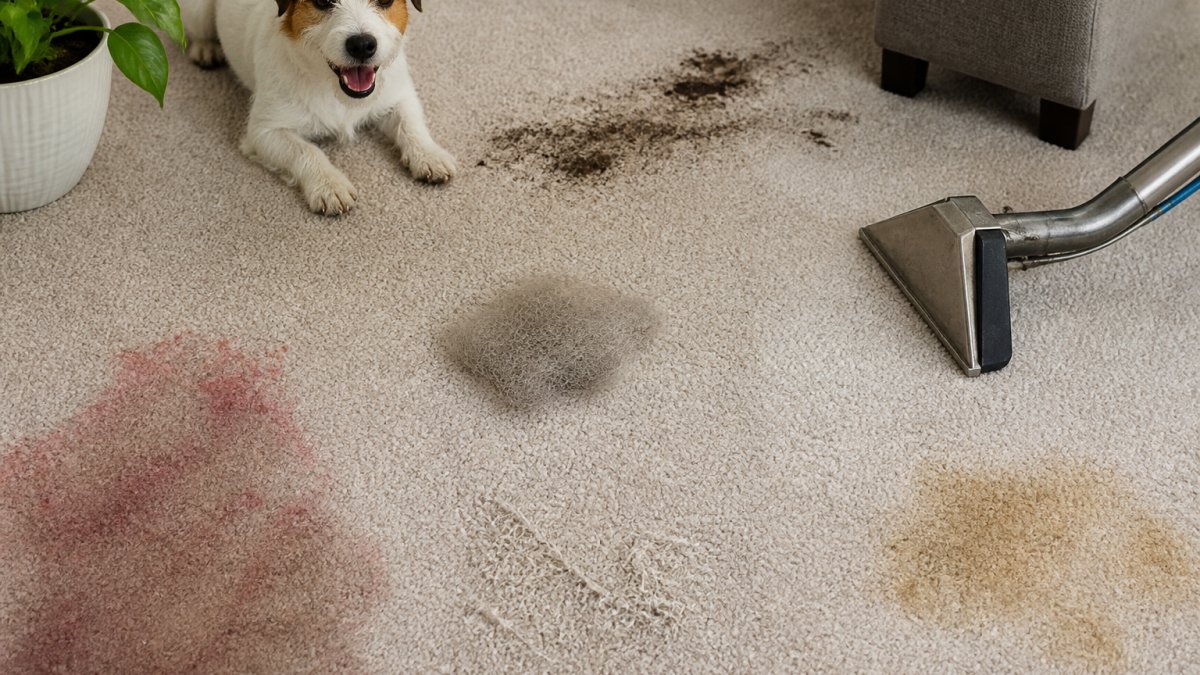
Pet urine odor removal from carpet padding fails with surface cleaning because the liquid passes straight through the carpet fibers and backing into the padding below. Carpet is designed to let liquid drain through. That is why a spill does not pool on top.
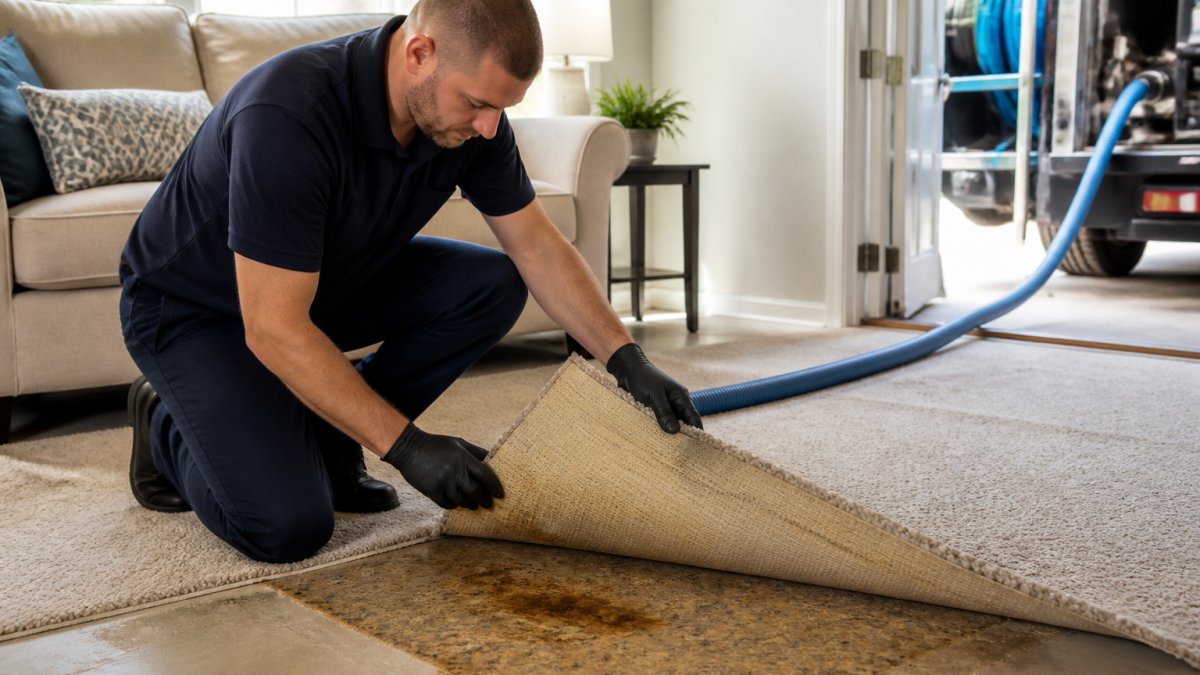
Urine carries uric acid crystals. Those crystals bond to the padding and, in bad cases, the subfloor. They reactivate with humidity, which is why the smell gets worse on damp days. Surface cleaning removes what is on top and leaves the crystals untouched.
This is the core reason DIY fails on carpet. You are cleaning the wrong layer.
Professional equipment reaches the padding and subfloor. Our truck-mounted, oxygen-infused method flushes the contamination out. That is the difference between odor neutralization and odor masking.
How Long Does Professional Pet Odor Removal Take?
How long professional pet odor removal takes depends on the size of the area and how deep the contamination goes. A single room with a fresh problem can take under an hour. Multiple rooms with old, set-in odor can take several hours.
Most homes fall in the middle. Here is a rough guide:
- One room, surface odor: 30 to 60 minutes
- One room, deep-set odor: 1 to 2 hours
- Multiple rooms: 2 to 4 hours
- Severe cases with subfloor treatment: half a day or more
Dry time matters too, especially for offices. Our fast-dry method means most carpets are back in use the same day.
Guarantees, Limitations, and Recurring Pet Odors
Recurring pet odors usually mean one of three things: the source was not fully treated, a new accident happened, or the pet is still marking the same spot. A good provider will tell you which one applies.
Honest limitations exist. No treatment can stop a pet from having new accidents. No cleaning can fix odor coming from inside a wall or under a floor. And some materials, once badly damaged, cannot be fully restored.
What you should expect is a clear guarantee. Ask what happens if the odor returns. A provider who stands behind the work will put it in writing. If someone will not commit to that, keep looking.
Health, Indoor Air, and Pet-Safety Considerations
Pet urine residue affects indoor air quality, not just smell. The EPA's guidance on indoor air quality notes that biological contaminants can trigger reactions in sensitive people. For homes with allergies or chemical sensitivities, how you clean matters as much as whether you clean.
This is where solution choice matters. Many standard cleaning chemicals leave their own residue and scent. We use 100% non-toxic, green-certified solutions because families and pets live on these surfaces.
If you have sensitivities, ask any provider two questions: what exactly is in the solution, and can they show certification. Vague answers are a red flag. The ASPCA's pet-safe cleaning guidance is a useful reference for what to avoid around animals.
Conclusion
The real question is not whether professional pet odor removal is worth it in general. It is whether it is worth it for your specific situation. If the smell keeps coming back, if the contamination is deep, or if your family's health is affected, the answer is usually yes.
Certified SteemPro has served Riverside-area homes and businesses for over 20 years. We use truck-mounted, oxygen-infused equipment, 100% non-toxic green-certified solutions, and fast dry times. We are licensed and insured, and we publish our pricing.
Get started with Certified SteemPro and get rid of the odor at its source.
Frequently Asked Questions
Will professional carpet cleaning remove pet urine odor?
It can, but only if the treatment reaches the source. Pet urine soaks through carpet fibers into the padding and sometimes the subfloor. Surface cleaning removes the smell temporarily, but odor returns when humidity rises. Professional pet odor removal uses sub-surface extraction, enzyme cleaners, and odor-neutralizing treatments to address contamination below the surface. If urine has soaked into the subfloor, providers may need to pull back carpet or replace padding for full odor elimination.
How much does professional pet odor removal cost?
Professional pet odor removal cost depends on the affected area, odor severity, and whether padding or subfloor needs treatment. Certified SteemPro publishes pricing on its website, and you can request a quote for your specific situation.
When should I hire a professional for pet odor removal?
Hire a professional when DIY enzyme cleaners have failed, when odor returns after cleaning, or when urine has soaked into carpet padding or subfloor. Recurring odors, strong ammonia smells, and visible stains that keep reappearing all point to contamination below the surface. If you have health concerns, chemical sensitivities, or pets and children in the home, professional treatment with non-toxic solutions gives you a safer, more thorough result than repeated DIY attempts.
Can professional upholstery cleaning remove pet odors?
Yes, professional upholstery cleaning can remove pet odors from sofas, chairs, and other soft furnishings. The process involves low-moisture extraction, enzyme treatment, and odor neutralization tailored to the fabric type. Results depend on how deeply urine penetrated the cushion foam. Surface odors typically lift in one visit. Deep contamination may need multiple treatments or cushion replacement. Ask your provider how they handle upholstery versus carpet, since the methods differ.