 how-to
Remove Pet Urine Odor From Carpet: Step-by-Step Guide
Table of Contents
- Why Pet Urine Odor Persists in Carpet
- Step 1: Blot and Remove Fresh Urine Immediately
- Step 2: Apply a Vinegar and Water Solution
- Step 3: Use the Best Enzymatic Cleaner for Pet Urine
- Why Carpet Smells Worse After Cleaning, And How to Avoid It
- How to Find Hidden Pet Urine Spots Before They Spread
- When to Call Professional Carpet Cleaning for Pet Odors
- Preventing Future Pet Accidents and Odor Buildup
- Frequently Asked Questions
Last Updated: September 2, 2026
Why Pet Urine Odor Persists in Carpet
Pet urine soaks through carpet fibers and saturates the padding underneath, sometimes reaching the sub-floor. Urine contains uric acid crystals that don't dissolve in water alone (peer-reviewed research). These crystals break down over time, releasing ammonia gas that creates persistent odor. Even after cleaning, bacteria continue breaking down organic matter deep in the carpet structure, regenerating smell for months or years.
Most people spot-treat the surface and think the problem is solved, then the smell returns within days. Standard cleaning methods don't penetrate deep enough to eliminate all urine deposits. Understanding this chemistry is the first step toward actually solving the problem rather than just masking it temporarily.
The ammonia compounds trapped in carpet fibers are particularly stubborn. They're volatile, releasing gas constantly, especially when humidity increases or the carpet gets wet again. This is why your carpet might smell worse on humid days or right after you've tried cleaning it yourself.
Step 1: Blot and Remove Fresh Urine Immediately
The moment you discover fresh urine, remove as much liquid as possible before it saturates deeper layers. Use absorbent towels and press firmly into the wet area. Don't rub; pressing extracts liquid without pushing it further into the fibers. Work from the edges toward the center to prevent spreading.
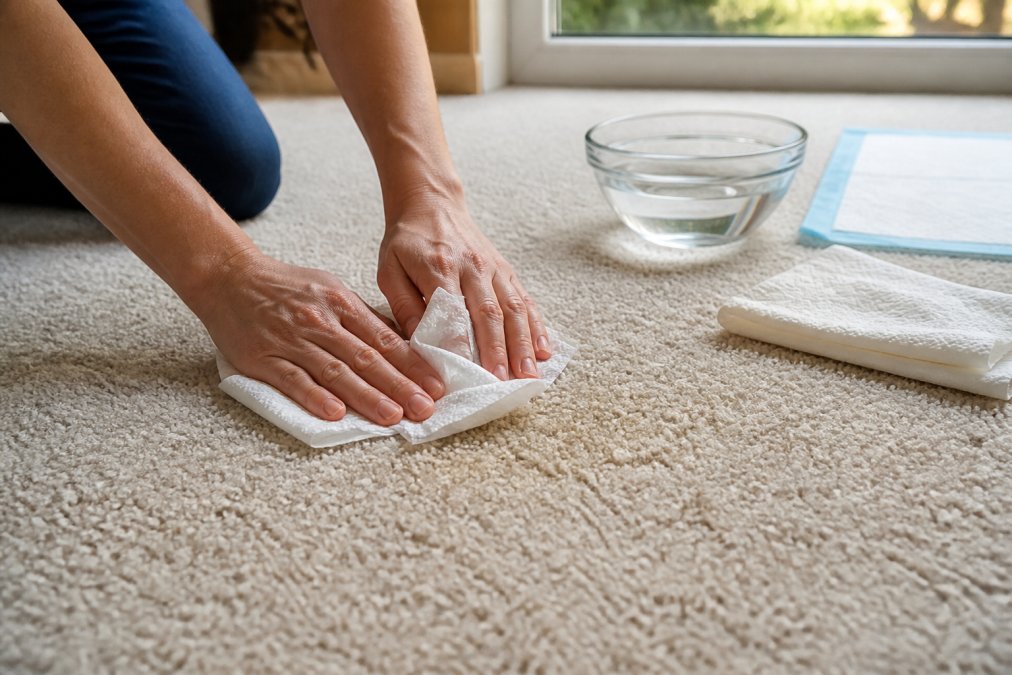
Repeat this pressing motion 5-10 times with fresh towels. A wet/dry vacuum removes significantly more moisture than blotting alone (the CDC). Speed is critical: the faster you extract the liquid, the less time it has to bond with fibers and penetrate padding.
Warm urine absorbs into carpet faster than cool urine. If the accident just happened, act immediately. Every minute of delay allows more penetration. Once urine dries, removing it requires enzymatic breakdown rather than simple extraction.
Step 2: Apply a Vinegar and Water Solution
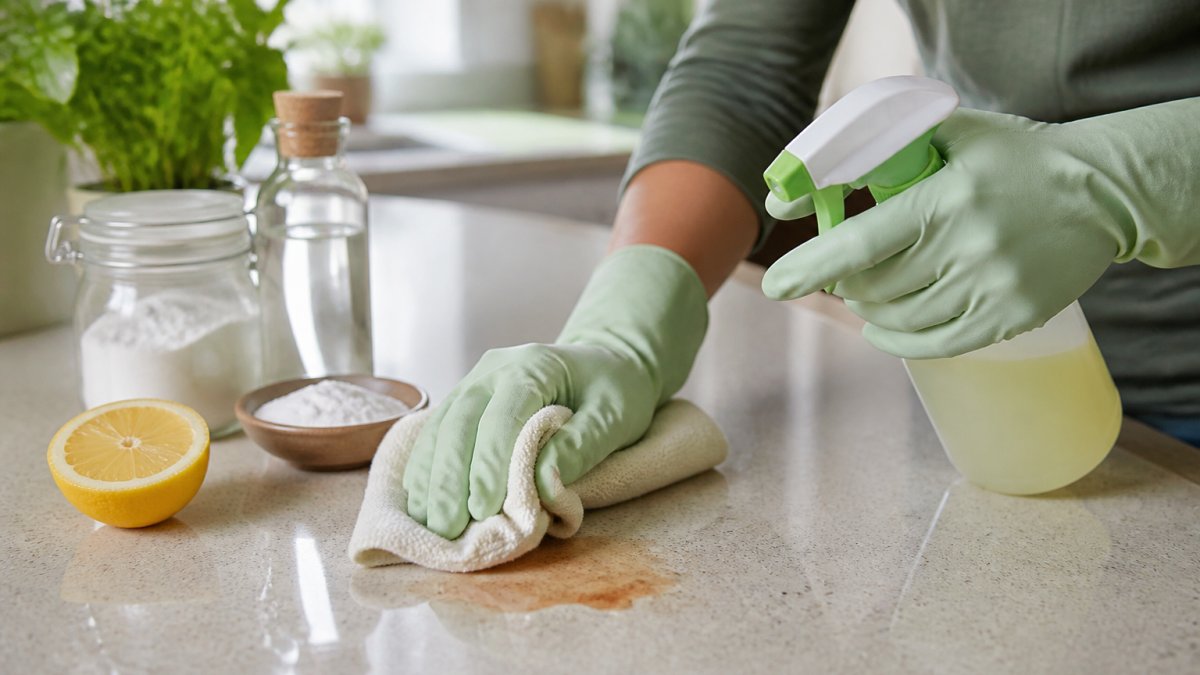
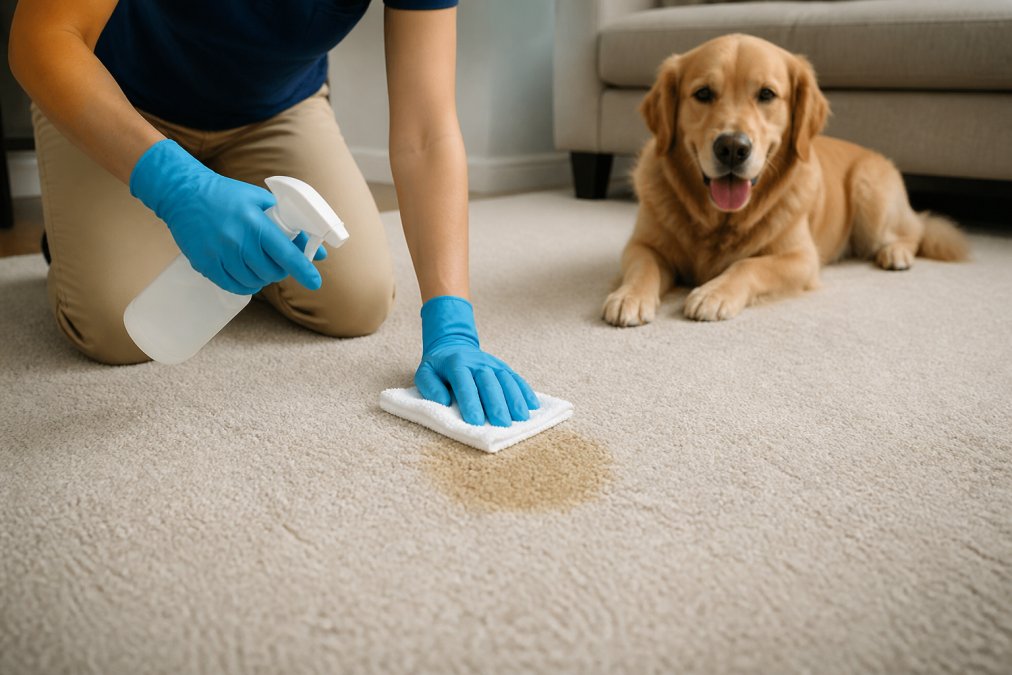
After blotting, use a vinegar and water solution to neutralize remaining urine and break down odor compounds. Mix one part white vinegar with one part lukewarm water in a spray bottle. Spray the affected area generously so the solution penetrates fibers and reaches the padding below.
Let the vinegar solution sit for 5-10 minutes. This contact time allows the acidity to break down uric acid crystals and neutralize ammonia. The vinegar smell is temporary and will fade as the solution dries. Don't skip this step thinking the vinegar smell is making things worse; it's actually working on the underlying urine chemistry.
After contact time, blot the area again with fresh towels. Press firmly to extract excess liquid. The carpet should feel damp, not soaked. White vinegar is gentle enough for most carpet types, but test it on an inconspicuous corner first if you're concerned about colorfastness.
Vinegar works best on fresh or recent accidents. For older, dried urine stains, vinegar alone won't fully eliminate the problem because uric acid crystals have already bonded deeply to fibers. In those cases, enzymatic cleaners are necessary.
Step 3: Use the Best Enzymatic Cleaner for Pet Urine
Enzymatic cleaners contain bacteria and enzymes that break down organic compounds in urine, uric acid, ammonia, and other smell-causing molecules (peer-reviewed research). Unlike vinegar, which neutralizes odor temporarily, enzymatic cleaners eliminate the source material itself.
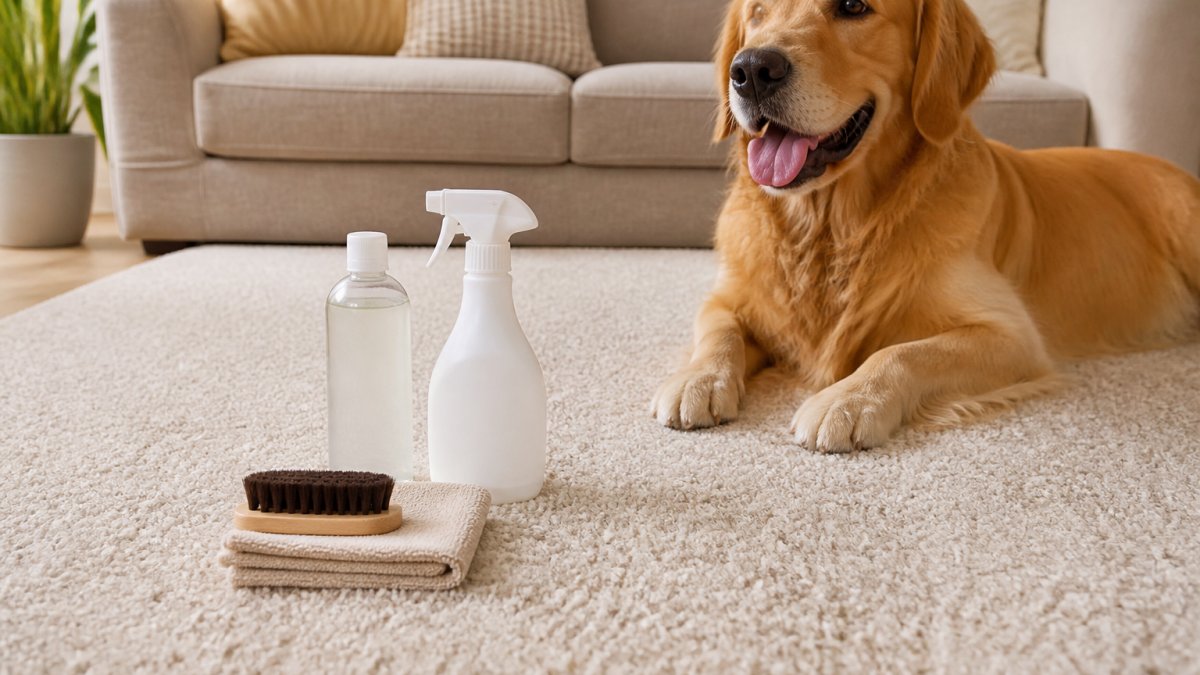
Look for a cleaner specifically formulated for pet urine. Apply according to product instructions, typically by spraying generously and allowing it to sit for several hours or overnight. During this contact time, enzymes actively break down urine compounds. Don't rush this step; longer contact means more thorough work.
After contact time, extract the cleaner using a wet/dry vacuum or blotting. Remove as much enzymatic solution as possible; residue left in the carpet can attract dirt and create new odors. The area should dry completely over 24 hours. If it still smells like urine after drying, the enzymes may not have reached all contaminated areas, suggesting urine has saturated deeper into padding or sub-floor.
Prioritize products with multiple enzyme strains and bacterial cultures. Multi-enzyme formulas are more effective than single-enzyme products because different urine compounds require different enzymatic breakdown.
Why Carpet Smells Worse After Cleaning, And How to Avoid It
Many people report that carpet smells worse immediately after cleaning. This isn't a sign that cleaning made things worse; you've reactivated dormant odor compounds. Water-based solutions rehydrate dried urine crystals and wake up bacteria that have been dormant. As they become active, they release ammonia gas more aggressively than before.
This is why carpet smells worse after shampooing. Standard carpet shampoos add significant moisture and detergent, which can reactivate urine odors throughout the entire carpet. If you've noticed your whole carpet smells like urine after professional cleaning, this is the reason.
The solution is ensuring complete drying and residue removal. After applying any cleaning solution, extract as much liquid as possible. Use a wet/dry vacuum multiple times if necessary. Open windows for ventilation. Run fans to speed drying. The faster the carpet dries completely, the sooner reactivated odor compounds settle and the smell fades.
Avoid over-saturating the carpet. Excessive moisture causes the carpet to stay damp longer, extending the period when odors are strongest. Use just enough solution to penetrate the affected area, then extract thoroughly.
For pet urine specifically, enzymatic cleaners are more effective than shampoo because they target actual urine chemistry rather than just adding surfactants.
How to Find Hidden Pet Urine Spots Before They Spread
Pets often have accidents in the same spots repeatedly. If your pet keeps returning to the same area, there's likely still urine odor there that you can't smell but your pet can.
The most reliable method is using a blacklight (UV light). Fresh urine glows under blacklight, making it visible in a dark room. Shine a blacklight over suspected areas in a darkened room. Any glowing spots indicate urine contamination needing treatment.
Walk through your home systematically with the blacklight, checking common accident spots: near doors, in corners, around room edges, and anywhere your pet spends time. Mark identified spots with tape so you can find them again in normal light. Then treat each spot following the steps above: blot, apply vinegar solution, and use enzymatic cleaner.
For ongoing prevention, check your carpet with a blacklight monthly if you have a pet with a history of accidents. Catching new accidents early, while still fresh, makes treatment dramatically more effective.
When to Call Professional Carpet Cleaning for Pet Odors
If you've treated the carpet multiple times and the smell persists, or if urine has saturated the padding and possibly the sub-floor, professional cleaning becomes necessary. Professional equipment and expertise can reach areas that household methods cannot.
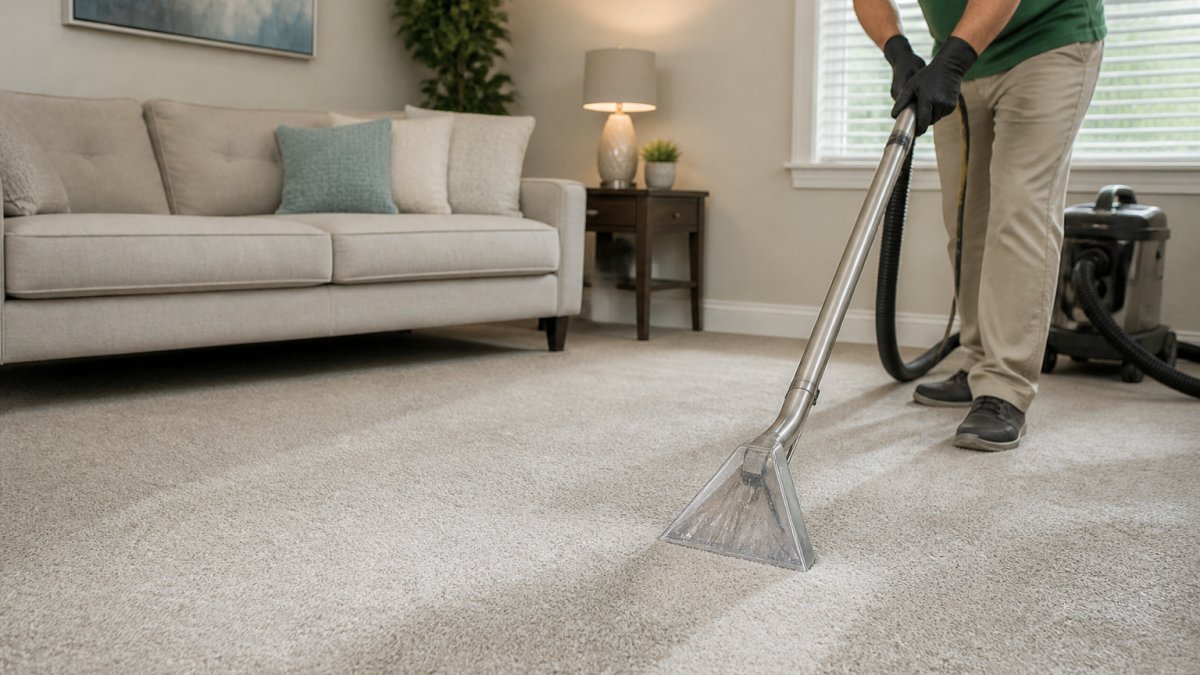
Professional carpet cleaners use truck-mounted systems with powerful extraction capabilities. These systems inject hot water and cleaning solution deep into carpet and padding, then extract it with far more force than household vacuums. This deep penetration and extraction can reach urine soaked into layers below the visible carpet surface.
Many professional cleaners use specialized equipment to detect urine using blacklight or moisture meters, allowing them to target treatment precisely. For stubborn odors, some use enzymatic treatments specifically designed for deep saturation with higher concentrations of active enzymes.
If urine has reached the sub-floor, the situation becomes more complex. The sub-floor may need sealing or treatment separately. In severe cases, padding may need replacement. A professional can assess whether contamination is limited to carpet and padding or has reached the sub-floor, and recommend appropriate treatment.
Certified SteemPro specializes in removing pet urine odor using oxygen-infused, truck-mounted cleaning technology. Our team has over 20 years of experience identifying hidden contamination and eliminating odors that persist after standard cleaning. We use green-certified solutions that break down urine chemistry without harsh chemicals, making the process safe for families and pets while delivering results that DIY methods often can't achieve.
Preventing Future Pet Accidents and Odor Buildup
Once you've eliminated existing odors, prevent new accidents and maintain a clean carpet environment. The best prevention strategy starts with addressing why your pet is having accidents. Medical issues, behavioral problems, or inadequate bathroom access are common causes.
If your pet is housetrained and suddenly having accidents, a veterinary visit is the first step. Urinary tract infections, diabetes, and other health conditions can cause sudden behavioral changes. Rule out medical issues before assuming it's behavioral.
For behavioral issues, ensure your pet has frequent access to appropriate bathroom areas. Increase outdoor bathroom breaks, especially after meals and before bedtime. Clean litter boxes daily. The easier you make it for your pet to use appropriate areas, the fewer accidents you'll have.
When accidents do happen, treat them immediately. Don't let urine sit overnight. Keep absorbent towels and a cleaning kit accessible for quick response.
Consider using enzymatic cleaners as preventive maintenance. Some people apply them to problem areas monthly, even without visible accidents. This keeps urine compounds from accumulating over time.
Ventilation and humidity control also matter. Urine odors are more noticeable in humid environments. Using a dehumidifier or improving air circulation helps keep odors from becoming overwhelming. Professional carpet cleaning annually or semi-annually, especially in homes with pets, helps prevent odor buildup before it becomes severe.
Pet urine odor in carpet is frustrating, but it's solvable when you understand the chemistry and use the right approach. Fresh urine responds well to blotting and vinegar. Aged urine requires enzymatic treatment. Deeply saturated carpet and padding may need professional intervention. If you've tried multiple DIY approaches and the smell persists, Certified SteemPro's oxygen-infused cleaning technology and 20+ years of pet odor expertise can eliminate odors that standard methods miss. Our green-certified solutions work deep into carpet and padding without harsh chemicals, restoring your home to a fresh, clean environment while keeping your family and pets safe.
Frequently Asked Questions
Q: How can I get rid of dog urine smell out of carpet permanently?
A: Permanent odor removal requires addressing the uric acid crystals embedded in carpet fibers and padding. Blot immediately, apply an enzymatic cleaner that breaks down the organic matter causing the smell, and extract moisture thoroughly. If odor persists after DIY treatment, sub-padding saturation often requires professional deep cleaning with truck-mounted extraction to reach below the surface. Enzymatic cleaners work best because they neutralize the source, not just mask the odor.
Q: Why does my carpet still smell like dog pee after cleaning?
A: Carpet often smells worse after cleaning because moisture reactivates uric acid crystals in the fibers and sub-padding, releasing odor again as it dries. Standard shampooing can also push urine deeper into the carpet rather than extracting it. Using a non-enzymatic cleaner leaves behind organic residue that bacteria feed on, intensifying the smell. Professional extraction with enzymatic treatment removes moisture and breaks down the source, preventing odor from returning.
Q: What is the best enzymatic cleaner for pet urine in carpet?
A: The best enzymatic cleaner for pet urine contains protease enzymes that break down uric acid crystals and organic matter. Look for products labeled non-bleach, non-lanolin, and safe for your carpet type. Apply the cleaner directly to the affected area, allow it to sit for the recommended time (usually 10-15 minutes), then blot thoroughly. Enzymatic cleaners work through bacterial breakdown, so they require moisture and time to be effective, don't rush the process.
Q: Will urine smell in carpet go away on its own?
A: No. Pet urine odor will not fade without treatment. Uric acid crystals remain in carpet fibers indefinitely and continue to release ammonia-like odors, especially when moisture reactivates them. The smell may seem to fade temporarily in dry conditions, but returns when humidity increases or the carpet gets wet. Active treatment with enzymatic cleaners or professional extraction is necessary to eliminate the odor permanently.
This article was written using GrandRanker