 blog
blog
Best Tools for Scrubbing Hard to Reach Grout
Table of Contents
- Why Hard to Reach Grout Demands the Right Tools
- Manual Brushes and Scrapers for Precision Cleaning
- Best Way to Clean Stained Grout with Drill Attachments
- Best Grout Cleaner for Mold and Mildew Prevention
- Steam Cleaning and Deep Scrubbing Techniques
- How Often Should You Professionally Clean Tile and Grout
- Avoiding Damage While Tackling Stubborn Buildup
- Frequently Asked Questions
Last Updated: October 1, 2026
Why Hard to Reach Grout Demands the Right Tools
Grout sits below the tile surface, trapping dirt and mold that regular mopping can't reach. Standard cleaning methods fail because they're designed for flat surfaces, not recessed lines.
Stained grout transforms your tile's appearance, pristine tile with blackened grout looks neglected. Hard to reach grout in corners, edges, and under cabinets poses the biggest challenge.
The right tools make the difference between surface cleaning and genuine restoration. Manual brushes, drill attachments, and steam cleaning methods each serve specific situations. Understanding which tool addresses your particular grout problem saves time, prevents damage to the tile itself, and delivers results that actually last.
Manual Brushes and Scrapers for Precision Cleaning
Manual tools offer control and precision for daily maintenance and light staining. However, repetitive wrist motion and grip fatigue challenge homeowners with arthritis or limited hand strength. Choosing the right tool means balancing cleaning power with sustainability.
Stiff-Bristled Brushes for Daily Maintenance
Stiff-bristled brushes with nylon bristles scrub away soap scum and light buildup without damaging sealer. Bristle stiffness is critical: soft brushes won't penetrate, while overly rigid ones scratch grout.
Quality brushes have bristles in the 0.012-0.015 inch diameter range and 60-80 bristles per square inch. Look for cushioned grip zones, angled handles (15-30 degrees), wider diameter handles (1.25-1.5 inches), and weight under 8 ounces to reduce strain during cleaning.
Test brushes in-store by simulating scrubbing for 30 seconds. Ergonomic brushes cost 20-30% more but prevent wrist and finger pain that stops regular maintenance.
Weekly or bi-weekly scrubbing prevents buildup and keeps hard to reach grout a maintenance task rather than a restoration project. For users with mobility concerns, break cleaning into two 15-minute sessions.
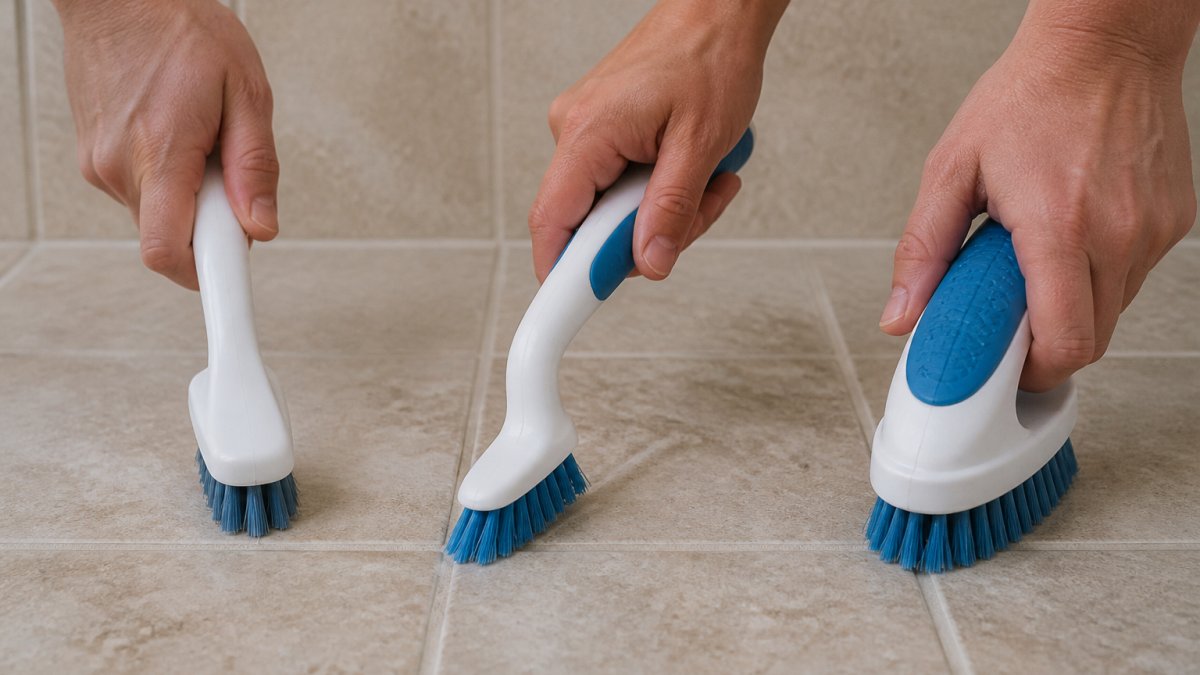
Wire Brushes and Corner Picks
Wire brushes cut through heavy buildup and years of discoloration, but excessive pressure damages grout and demands more hand effort than nylon alternatives.
Corner picks fit tight spaces where brushes can't reach and work on sealed and unsealed grout. However, they require fine motor control and sustained pinch-grip pressure, making them difficult for users with arthritis.
Wire brushes handle broad grout lines on large surfaces; corner picks address tight spaces. Alternating between them distributes physical demand across different muscle groups if repetitive cleaning causes pain.
Best Way to Clean Stained Grout with Drill Attachments
Drill attachments add mechanical power for faster cleaning of hard to reach grout, but technique and equipment selection matter. They work best on large tile installations; they're less practical for small bathrooms or detailed tile work.
Choosing the Right Drill and Attachment
Quality attachments have nylon bristles (0.010-0.014 inches) in a cylindrical pattern with a 1/4 inch shaft. Softer bristles work on sealed grout; stiffer options handle unsealed grout.
Use a variable-speed drill; rotation speed determines effectiveness and safety. Optimal range is 200-400 RPM: 200-250 for sealed grout, 250-350 for general cleaning, 350-400 for heavily stained unsealed grout. Higher speeds damage sealer and create excessive dust. Cordless drills suit projects under 500 square feet; corded drills provide consistent power for larger installations.
Technique and Safety Precautions
One critical technique: keep the brush perpendicular to the grout line and let the drill do the work. Pressing too hard accelerates bristle wear, risks gouging the grout, and creates uneven cleaning patterns. A light touch with consistent motion produces better results than aggressive pressure with intermittent contact.
When using drill attachments, follow these safety and effectiveness guidelines:
- Start at low speed (200 RPM) and increase gradually; sudden high-speed engagement can jerk the drill and damage grout edges
- Use both hands to control the drill; one hand on the handle, one stabilizing the attachment near the grout line
- Wear safety glasses to protect against dust and debris kicked up by rotating bristles
- Work in 2-3 foot sections before stepping back to assess; this prevents over-cleaning one area while neglecting others
- Avoid prolonged contact on a single grout line; keep the brush moving to prevent heat buildup and bristle damage
- Never force the brush into tight corners; drill attachments are designed for linear grout lines, not recessed corners where manual picks work better
Grout Type Compatibility
Drill attachments work differently depending on your grout type, and using the wrong speed or pressure can cause permanent damage:
Sealed Grout: Use 200-250 RPM with soft nylon bristles. Sealed grout has a protective coating; aggressive scrubbing removes the sealer, leaving grout vulnerable to staining and moisture penetration. If you're unsure whether your grout is sealed, test on an inconspicuous area first.
Unsealed Cementitious Grout: Use 250-350 RPM. This is the most common residential grout type and tolerates moderate mechanical action. Unsealed grout is more porous and absorbs stains deeper, so drill attachments are particularly effective here.
Epoxy Grout: Use 200-250 RPM maximum. Epoxy grout is harder and more brittle than cementitious grout; excessive speed or pressure can crack it. Epoxy is also more stain-resistant, so you may find drill attachments unnecessary for routine maintenance.
Sanded vs. Unsanded Grout: Sanded grout (used in grout lines wider than 1/8 inch) has sand particles that help the bristles grip and agitate. Unsanded grout is smoother and requires slightly lower RPM to avoid surface damage.
When Drill Attachments Excel and When They Fall Short
Drill attachments excel at removing mold and mildew from grout because the consistent mechanical action breaks down biofilm buildup. For hard to reach grout in corners and tight spaces, you'll still need manual tools; drill attachments can't reach the deepest recesses, and forcing them into corners damages bristles and grout edges.
Drill attachments work best for:
- Large tile installations (kitchen backsplashes, bathroom floors with 100+ linear feet of grout)
- Mold and mildew removal (the consistent agitation breaks down biological growth)
- Soap scum and mineral deposits on unsealed grout
- Pre-cleaning before sealing or re-grouting
Drill attachments are less effective for:
- Tight corners and edges (use manual corner picks instead)
- Heavily sealed grout (risk of sealer removal)
- Delicate tile finishes that scratch easily
- Small, detailed tile work where precision matters more than speed
Best Grout Cleaner for Mold and Mildew Prevention
The cleaning solution you pair with your tools determines whether you're removing surface stains or addressing the root cause. Mold and mildew in grout lines indicate moisture is being trapped, the grout itself becomes a breeding ground for biological growth.
Oxygen-infused cleaning solutions penetrate grout pores and break down organic matter without harsh chemical residue. These solutions work by releasing oxygen molecules that oxidize mold spores and bacteria, preventing regrowth. Unlike bleach-based cleaners that only kill surface growth, oxygen solutions address what's living inside the grout structure.
Certified SteemPro uses oxygen-infused technology specifically because it prevents mold from recurring as quickly. When you clean grout with standard cleaners and see mold return within weeks, it's because the cleaner didn't address the biological material deep in the grout. Oxygen-based solutions change that equation.
For hard to reach grout that tends to stay damp, prevention matters more than cleaning power. A sealed grout line resists moisture penetration, which stops mold before it starts. If your grout isn't sealed, use your cleaning solution to prepare the surface, then apply sealer afterward. This two-step approach, clean, then seal, prevents the cycle of repeated mold growth.
Steam Cleaning and Deep Scrubbing Techniques
Steam cleaning represents the deepest cleaning method available without professional equipment. High-temperature steam penetrates grout pores, loosening buildup that brushes and scrapers can't reach. Steam also kills mold spores and bacteria through heat, not chemicals.
A handheld steam cleaner with a grout attachment delivers concentrated steam into grout lines.
How Often Should You Professionally Clean Tile and Grout
Professional cleaning frequency depends on your tile location, foot traffic, and moisture exposure. Bathrooms with high humidity require more frequent attention than kitchen tile with moderate moisture. The best way to clean stained grout starts with understanding your specific environment.
Avoiding Damage While Tackling Stubborn Buildup
Aggressive scrubbing damages grout more often than it cleans it. Grout is porous and softer than tile, overly stiff brushes, excessive pressure, and harsh chemicals all cause deterioration. Understanding the limits of your tools prevents costly repair work.
Frequently Asked Questions
What is the best tool for cleaning grout in tight corners without damaging tiles?
Stiff-bristled nylon brushes and corner picks are ideal for hard to reach grout because they provide enough scrubbing power to remove buildup while protecting tile surfaces from scratches. A 1/4-inch grout line brush or a precision corner tool allows you to reach crevices that wider brushes cannot access. For stubborn stains, a wire brush works well on grout alone, but avoid contact with the tile surface itself. Always test any tool on a small, inconspicuous area first.
Are electric grout brushes worth the investment?
Electric and battery-operated grout scrubbers save significant time and reduce ergonomic strain compared to manual scrubbing, especially for large tile areas or heavy buildup. They provide consistent scrubbing power and reach deep into grout lines efficiently. For homeowners with extensive grout cleaning needs or those sensitive to repetitive strain, they offer good value. For occasional spot cleaning of hard to reach grout, a quality manual brush may suffice. Consider your frequency of use and the total grout area before deciding.
What is the best way to clean stained grout without causing discoloration?
The best way to clean stained grout combines the right tool with an appropriate cleaning solution. Use a stiff brush or drill attachment paired with an oxygen-based or enzymatic cleaner rather than harsh acids that can damage grout. For mold and mildew stains, eco-friendly, non-toxic solutions preserve grout integrity while removing discoloration. Always brush in the direction of the grout line, and rinse thoroughly with clean water after scrubbing to prevent residue buildup that can reattract dirt and mold.
How often should you professionally clean tile and grout to prevent mold and mildew?
Professional tile and grout cleaning every 1-2 years helps prevent heavy mold and mildew accumulation, depending on humidity levels and bathroom ventilation. High-moisture areas like bathrooms may benefit from annual deep cleaning. Between professional visits, monthly maintenance with a stiff brush and a best grout cleaner for mold and mildew keeps buildup minimal. Proper ventilation and regular sealing of grout lines extend the time between deep cleanings and reduce the risk of permanent discoloration.