 blog
blog
Eco-Friendly Cleaning for Rental Properties: 2026 Guide
Table of Contents
- Why Eco-Friendly Cleaning for Rental Properties Wins Guests and Reviews
- Best Methods for Deep Cleaning Rental Carpets
- Non-Toxic Cleaning Checklist for Rentals
- Eco-Friendly Turnover Cleaning Tips for Faster Changeovers
- Cost-Benefit Analysis: Eco-Friendly Products vs. Conventional Cleaners
- Allergy-Friendly and Fragrance-Free Standards for Rental Hygiene
- Eco-Certification Standards and Property Management Software Integration
- Conclusion
- Frequently Asked Questions
Last Updated: October 4, 2026
Why Eco-Friendly Cleaning for Rental Properties Wins Guests and Reviews
Eco-friendly cleaning for rental properties means using non-toxic, biodegradable products and low-residue methods to clean a short-term rental between guests. At Certified SteemPro, we have cleaned carpets, upholstery, tile, and grout for more than 20 years, and we see the same pattern in every turnover: guests notice how a unit smells and feels before they notice anything else.
That first impression drives your rating.
A rental that smells like harsh bleach reads as "clean but chemical." A rental cleaned with plant-based products reads as fresh. Same effort, different result.
Here is what most hosts get wrong: they treat green cleaning as a cost, not a guest-experience tool. It is both. Below, we break down the supplies, the deep-cleaning methods, the turnover workflow, and the real trade-offs so you can build a cleaning protocol that holds up to guest scrutiny.
Best Methods for Deep Cleaning Rental Carpets
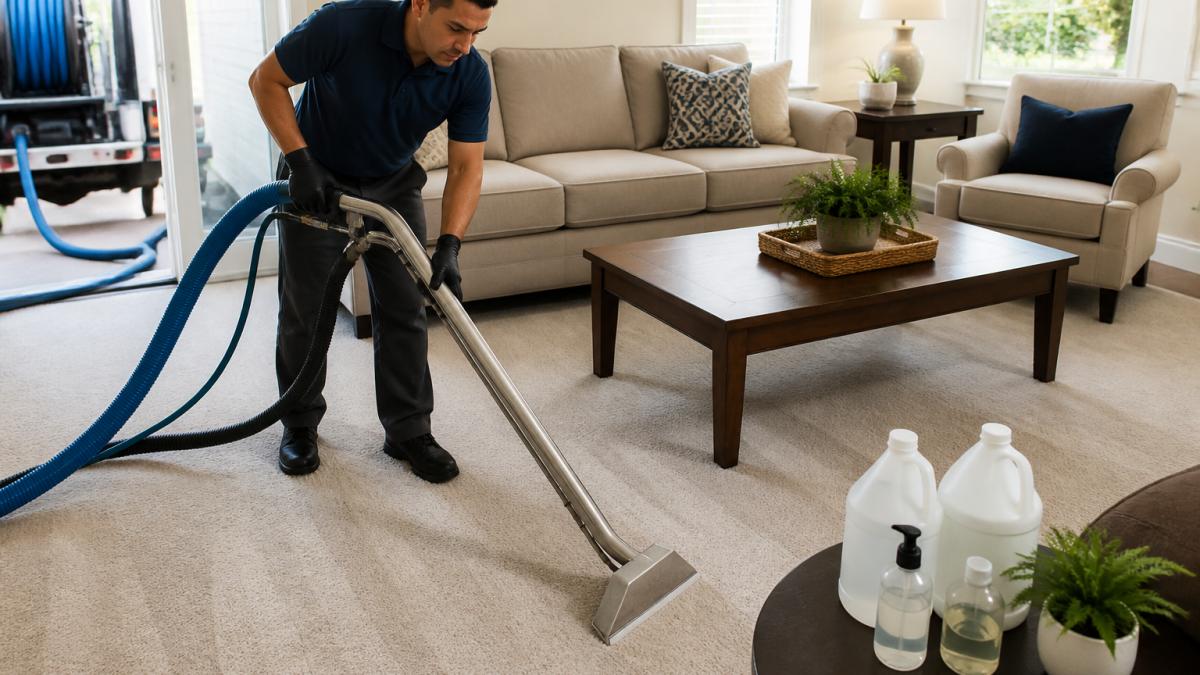
The best method for deep cleaning rental carpets is hot water extraction paired with oxygen-infused cleaning solutions. This combo lifts embedded soil, pet dander, and odor at the source instead of masking it.
Hot Water Extraction and Oxygen-Infused Cleaning
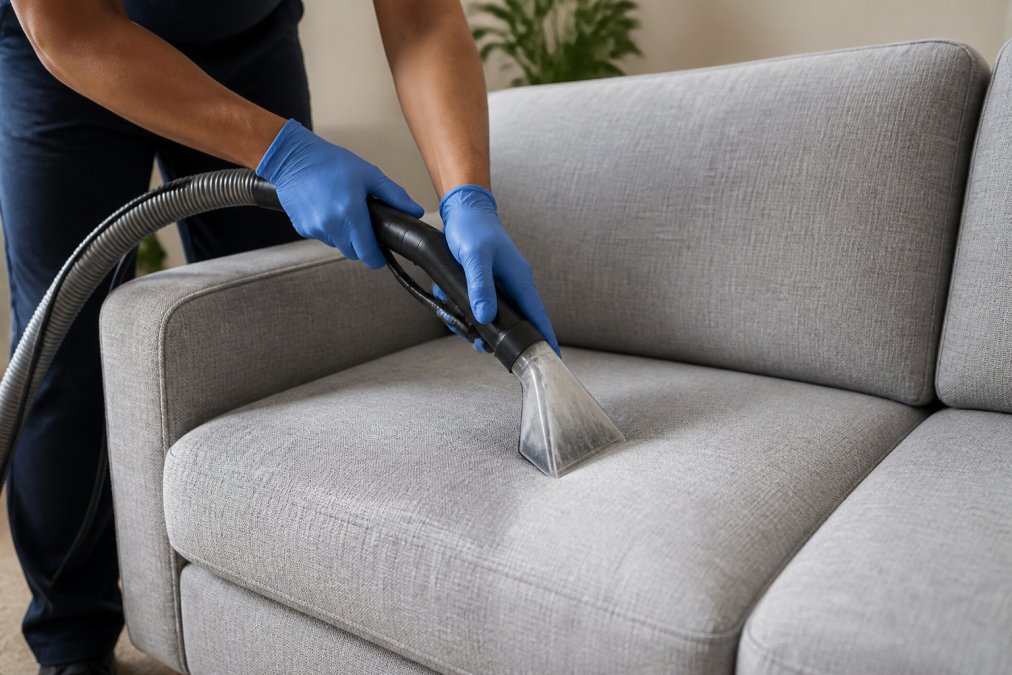
Hot water extraction, often called steam cleaning, flushes deep dirt out of carpet fibers and pulls it away with strong suction. Oxygen-infused solutions break down stains without the harsh fumes of traditional solvents.
Key advantages for rentals:
- Removes embedded allergens and pet dander
- Leaves no sticky residue that attracts new dirt
- Dries faster than shampoo-based methods
Fast dry times matter. Guests check in hours after you finish, and damp carpet ruins the first impression.
Stain and Odor Removal for Pet Accidents
Pet accidents are the number one carpet complaint we hear from hosts. The urine soaks into the pad, not just the surface fibers, so surface sprays rarely fix the smell.
A proper fix requires:
- Enzyme treatment to break down uric acid crystals
- Sub-surface extraction to flush the pad
- Odor neutralization, not masking
If you skip the pad, the smell returns on the next humid day.
Non-Toxic Cleaning Checklist for Rentals
A non-toxic cleaning checklist for rentals covers every surface a guest touches, from door handles to remote controls. Build it once, then reuse it at every turnover.
- Vacuum all carpets and rugs with a HEPA filter
- Wipe high-touch surfaces: handles, switches, remotes, thermostats
- Clean bathrooms with a plant-based all-purpose cleaner
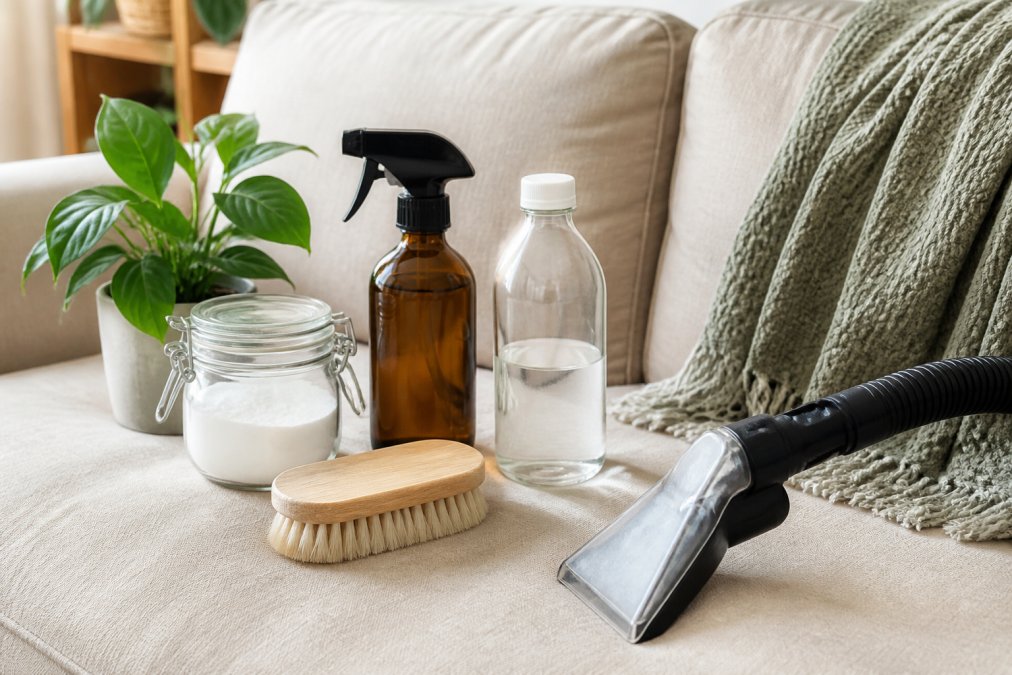
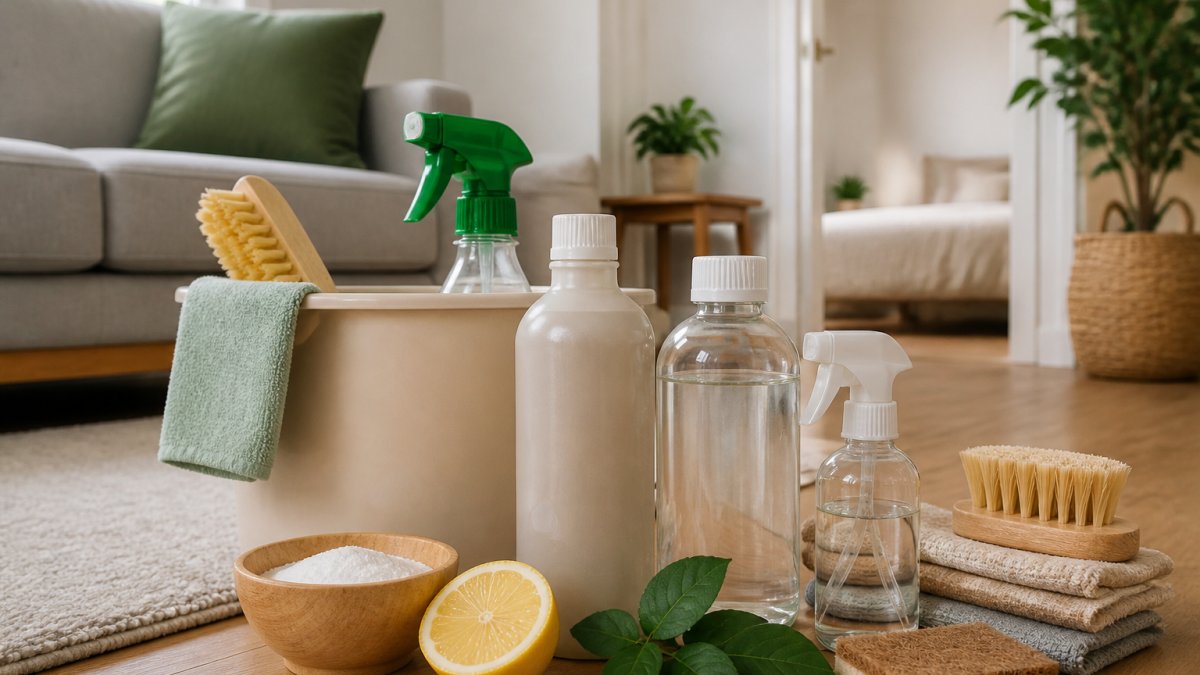
For natural cleaning ingredients, keep three staples on hand: white vinegar, baking soda, and lemon. They handle most everyday messes without a chemical smell.
Eco-Friendly Turnover Cleaning Tips for Faster Changeovers
Eco-friendly turnover cleaning tips only pay off when they fit inside a real changeover window. Most short-term rental turnovers run two to four hours depending on unit size, and green methods can either shave time off that window or add to it, the difference is in how you sequence the work.
Start with a zone system. Clean in the same order every time: kitchen, bathrooms, bedrooms, living areas, entryway. This cuts wasted motion and lets a substitute cleaner follow the same path without rethinking it.
A Turnover Sequence That Works With Green Products
- Strip and start laundry first. Pull all linens and towels, start the first load with fragrance-free detergent, and let the machines run while you clean. Laundry is the longest single task in most turnovers, so it should never be the last thing you start.
- Open windows and run exhaust fans. Ventilation is the cheapest green cleaning tool you have. It clears cooking odors, pet dander, and residual moisture before you ever pick up a spray bottle.
- Work top to bottom, dry to wet. Dust ceiling fans, light fixtures, and shelves before you wipe counters, and wipe counters before you mop. Cleaning wet-over-dry just moves dirt back onto surfaces you already finished.
- Hit high-touch surfaces with microfiber and water first. Door handles, switches, remotes, thermostats, and appliance handles usually only need a damp microfiber cloth. Save the plant-based disinfectant for surfaces that actually need it, bathroom fixtures, kitchen counters after raw food, and trash bin lids.
- Deep-clean one rotating zone per turnover. You cannot deep-clean an entire unit in a two-hour window. Rotate: carpets one turnover, oven and fridge the next, grout and tile the next. This keeps the unit genuinely clean over a season instead of surface-clean every time.
- Finish with a 30-minute air-out and a walkthrough. Do the walkthrough last, with the windows still open, so you catch odors and missed spots before the door locks.
Waste Management and Recycling During Turnover
Green cleaning is not only about what you spray, it is about what you throw away. A few habits cut landfill waste without slowing the clean:
- Set up a two-bin system in the kitchen: one for trash, one for recyclables, both clearly labeled for guests.
- Collect partially used guest toiletries and either donate them to a local shelter (if your area allows) or consolidate them for your own restocking.
- Replace single-use paper towels with color-coded microfiber cloths. A typical rental can go through several rolls of paper towels per turnover; a set of microfiber cloths lasts hundreds of washes.
Timing Benchmarks to Plan Around
Exact times vary by unit size, but a common pattern for a two-bedroom rental is:
- Laundry start and strip: 10 minutes
- Kitchen: 30 to 40 minutes
- Bathrooms: 30 to 40 minutes
If your green protocol is consistently pushing past these windows, the problem is usually sequencing, not the products. Microfiber and ventilation are the two biggest time-savers because they replace scrubbing and air-freshening steps entirely.
Cost-Benefit Analysis: Eco-Friendly Products vs. Conventional Cleaners
Eco-friendly products usually cost more per bottle than conventional cleaners, but the gap narrows once you factor in guest outcomes. A unit that smells clean earns better reviews, and better reviews fill more nights.
| Factor | Eco-Friendly Products | Conventional Cleaners |
|---|---|---|
| Upfront cost per bottle | Higher | Lower |
| Guest health impact | Low risk | Higher chemical exposure |
| Review impact | Positive, fresh scent | Mixed, chemical odor complaints |
| Surface safety | Gentle on most finishes | Can dull or strip finishes |
| Long-term property wear | Minimal | Possible residue buildup |
The real math is about repeat bookings. One bad review about chemical smells can cost you more than a year of product savings.
Allergy-Friendly and Fragrance-Free Standards for Rental Hygiene
Fragrance-free cleaning is the safest default for rental hygiene. Strong scents, even "natural" ones, can trigger reactions in guests with allergies or chemical sensitivities.
Set these standards:
- Use fragrance-free detergents and cleaners
- Skip plug-in air fresheners entirely
- Avoid essential oils in common areas unless a guest requests them
Allergen reduction is a selling point. List "fragrance-free, non-toxic cleaning" in your listing description. Guests with sensitivities search for exactly that phrase.
Eco-Certification Standards and Property Management Software Integration
Eco-certification standards give your cleaning claims proof. Without a third-party label, "green cleaning" is just a phrase in your listing description, and guests who care about chemical exposure know the difference.
What the Main Certifications Actually Mean
- EPA Safer Choice. The U.S. Environmental Protection Agency's Safer Choice program verifies products against human health and environmental criteria. The label appears on the product itself, so you can photograph it and keep it on file.
- Green Seal. A nonprofit certification that covers cleaning products, paper products, and cleaning services. Green Seal standards are commonly referenced by commercial cleaning contracts.
- UL ECOLOGO. A third-party certification for cleaning products and services, often used in facility management.
A practical rule: if a product carries a Safer Choice, Green Seal, or UL ECOLOGO mark, you can cite it. If it only says "eco-friendly" or "natural," treat it as marketing until you verify the ingredients.
How to Market Green Status to Justify Premium Rates
Guests with allergies, asthma, or chemical sensitivities actively search for listings that match their needs. A fragrance-free, non-toxic cleaning standard is a filter they use, and a reason to pay more for a unit that meets it.
To make the standard visible:
- Add a line to your listing description: "Cleaned with fragrance-free, non-toxic products verified by third-party certification."
- Add a photo of your cleaning caddy with the certification labels visible.
- Add a house rule that asks guests not to use plug-in air fresheners or scented candles during their stay, so the standard holds between cleanings.
- Include the standard in your welcome message so guests know what to expect before they arrive.
This is the angle most cleaning guides miss: green cleaning is not only an operational choice, it is a positioning choice. A verified standard is a differentiator you can charge for.
Building the Standard Into Your Property Management Software
A certification only holds if it survives a substitute cleaner, a busy weekend, or a new hire. That is where your property management software (PMS) does the work.
- Create a "green cleaning" task inside every turnover checklist in your PMS. Make it a required step, not a note.
- Attach the product list, brand names, certification numbers, and dilution ratios, to the task so a substitute cleaner uses the right products.
- Store certification photos in the listing notes so you can send proof to a guest in seconds.
- Log exceptions. If you used a conventional product for mold or pathogen cleanup, note it in the task history. That record protects you if a guest asks.
A Simple Certification Audit for Your Supply Closet
Once a quarter, pull every cleaning product you use and check three things: the certification label, the ingredient list, and the dilution instructions. Products that fail the check get replaced at the next restock. This keeps your standard current as formulations change, and it gives you a written record if a guest ever questions your claims.
Conclusion
The challenge is simple: guests expect a spotless, fresh-smelling unit, and harsh chemicals work against that goal. Certified SteemPro solves it with 100% non-toxic, green-certified solutions, truck-mounted oxygen-infused cleaning, and fast dry times that fit tight turnover windows. Our team brings more than 20 years of experience to every carpet, upholstery, tile, and grout job. Submit a request with Certified SteemPro and get a rental that guests rate on cleanliness, not chemical smell.
Frequently Asked Questions
What are the best eco-friendly cleaning products for rental properties?
Look for plant-based surfactants, vinegar, baking soda, castile soap, and essential oils like tea tree or lavender. These handle everyday messes on high-touch surfaces without leaving harsh residues. For carpets and upholstery, oxygen-infused or hot water extraction with green-certified solutions removes deep stains and odors without toxic chemicals. Check that products are biodegradable and free of chlorine, ammonia, and synthetic fragrances to protect indoor air quality and meet guest expectations.
How do I deep clean a rental property using sustainable methods?
Start with a room-by-room plan: vacuum all carpets and rugs, then use a hot water extraction machine with a green-certified solution for carpets and upholstery. For hard surfaces, mix equal parts white vinegar and water in a spray bottle for an all-purpose cleaner. Sprinkle baking soda on carpets before vacuuming to lift odors. Use microfiber cloths to wipe high-touch surfaces, and finish with a fragrance-free disinfectant. This approach reduces chemical exposure and supports guest health.
What should be included in an eco-friendly rental turnover checklist?
Your checklist should cover: stripping beds and laundering linens with fragrance-free detergent; wiping high-touch surfaces with a non-toxic all-purpose cleaner; vacuuming and spot-treating carpets; disinfecting bathrooms with plant-based products; emptying and segregating trash for recycling; and opening windows to improve indoor air quality. Add a final walkthrough to check for stains, odors, and forgotten items. This systematic approach keeps turnover fast and consistent.
Are oxygen-infused cleaning methods safe for rental upholstery?
Oxygen-infused cleaning uses hydrogen peroxide-based solutions that break down stains and odors without harsh chemicals. It is generally safe for most upholstery fabrics when applied by a trained professional, but always test a small hidden area first. This method is effective on pet accidents, wine, and food stains, and it leaves no toxic residue. For delicate fabrics like silk or velvet, consult a specialist before cleaning to avoid damage.