 blog
blog
Sofa Cleaning Services: 2026 Upholstery Care Guide
Table of Contents
- What Professional Sofa Cleaning Services Actually Do (Step by Step)
- Best Upholstery Cleaning Methods for Microfiber, Polyester, Cotton, and Leather
- How Long Does Upholstery Take to Dry After Cleaning?
- Upholstery Cleaning Cost: What Drives the Price of Sofa Cleaning Services
- DIY vs. Professional Sofa Cleaning: A Real Cost-Benefit Analysis
- Stain, Odor, and Allergen Removal: What Deep Cleaning and Sanitization Can Fix
- Choosing Sofa Cleaning Services Near You: Vetting, Guarantees, and Scheduling
- Frequently Asked Questions
Last Updated: September 17, 2026
What Professional Sofa Cleaning Services Actually Do (Step by Step)
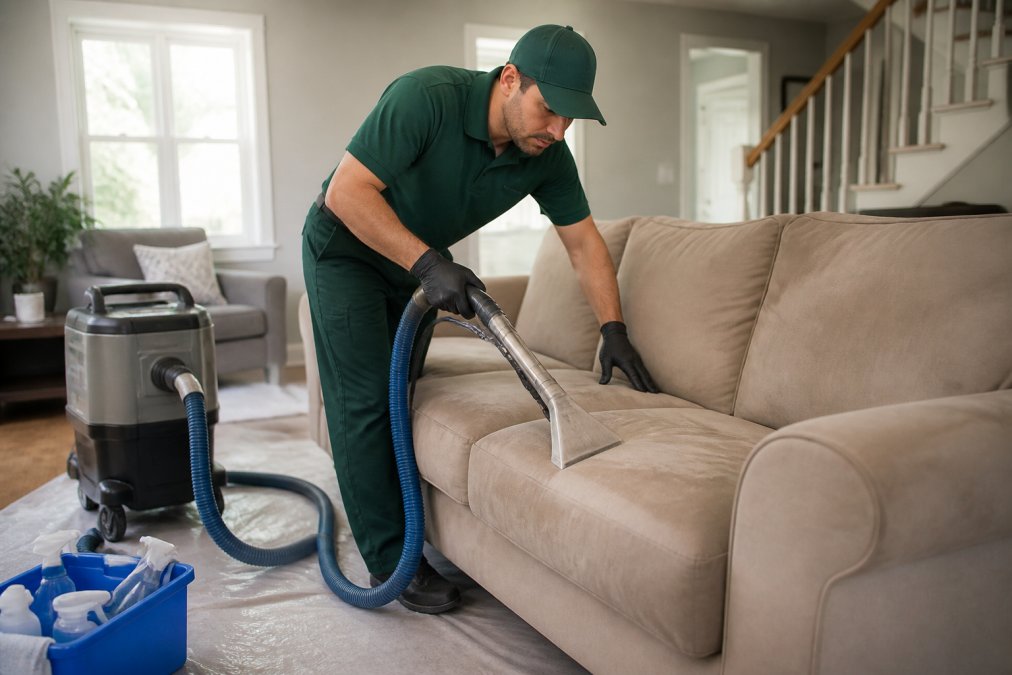
Professional sofa cleaning services restore upholstery through a multi-stage process that removes embedded dirt, oils, and allergens without damaging fabric. At Certified SteemPro, we've spent over 20 years refining that process with truck-mounted, oxygen-infused equipment. Here's what happens when a trained technician works on your couch, and why skipping steps leads to smelly, stiff results.
Dry Vacuuming and Pre-Treatment
Dry vacuuming comes first because water alone can't lift dry soil from fabric fibers. A technician runs a high-powered vacuum across every cushion, crevice, and seam to pull out loose dust, crumbs, and pet hair before any liquid touches the sofa. Skipping this step is the most common mistake in cheap sofa cleaning, turning surface dirt into mud once moisture is applied.
Hot Water Extraction and Steam Cleaning
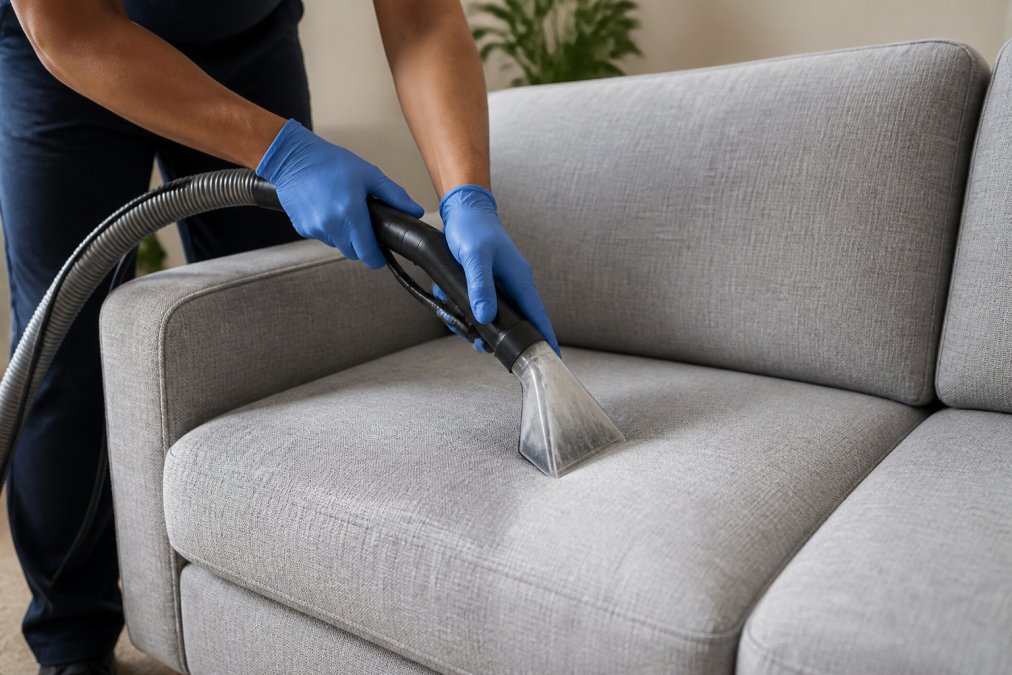
Hot water extraction, often called steam cleaning, flushes suspended soil out of the cushion padding under pressure. The same wand injects the cleaning solution and immediately extracts it, along with dissolved grime and moisture. This is where deep cleaning separates from surface wiping.
Best Upholstery Cleaning Methods for Microfiber, Polyester, Cotton, and Leather
The best upholstery cleaning method depends entirely on the fabric, and using the wrong one is how sofas get ruined. The fastest way to know what you're dealing with is the cleaning code, usually W, S, WS, or X, printed on the law tag under the seat cushion. That letter tells a technician which chemistry and moisture level the fabric tolerates.
| Code | What It Means | Safe Approach | Watch Out For |
|---|---|---|---|
| W | Water-based cleaners only | Hot water extraction or low-moisture steam | Solvent-only products can leave residue |
| S | Solvent-based cleaners only | Dry solvent or encapsulation | Water causes rings, shrinkage, and dye bleed |
| WS | Water or solvent | Either method; match to soil type | Over-wetting still flattens pile |
| X | Vacuum only | Dry vacuum and light brushing | Any liquid can damage the fabric |
Microfiber and Polyester
Microfiber and polyester are synthetic, so they tolerate hot water extraction well, but their weakness is heat and over-wetting, not water itself. Too much moisture flattens the nap and leaves a crushed, shiny patch that never fully recovers. A technician works in low-moisture passes, keeps the wand moving, and uses air movers immediately so the pile dries upright.
Cotton and Linen
Cotton and linen are natural cellulosic fibers, so they absorb water, swell, and can shrink or bleed dye. The safe approach is a gentle solvent or low-moisture clean with controlled dwell time, not soaking extraction. Linen wrinkles and distorts when saturated, so a technician cleans it in sections and dries it flat. Pre-testing for dye stability matters more here than on synthetics because color loss is usually permanent.
Velvet and Delicate Pile Fabrics
Velvet is the fabric most often ruined by well-meaning cleaning. Its pile has a direction, and scrubbing against the nap leaves permanent marks and bruising. The correct method is dry solvent cleaning or very light low-moisture treatment applied with the nap, followed by brushing the pile back into alignment while it dries. Never use a rotating brush or wet vacuum on velvet.
Leather and Faux Leather
Leather conditioning is the step most DIY attempts skip. Leather is skin: it dries out, cracks, and fades without periodic conditioning. A proper leather service cleans the surface, removes body oils from headrests and armrests, then applies a conditioner that restores suppleness and protects against future soiling. Faux leather (polyurethane or vinyl) needs a pH-balanced wipe-down and no oil-based conditioner, which can break down the coating and cause peeling.
Protection Treatments
Fabric sofas benefit from a finishing step after cleaning. An upholstery protection treatment helps repel spills so the next accident beads up instead of soaking in; on leather, a conditioner plays the same role. Protection isn't a substitute for cleaning, it slows soiling, it doesn't prevent it, but it extends the interval between deep cleans and makes spot cleanup easier.
How to read furniture cleaning codes and care labels
How Long Does Upholstery Take to Dry After Cleaning?
Most upholstery dries in 4 to 6 hours with proper airflow, though heavy saturation or humid weather can stretch that to 24 hours. How long upholstery takes to dry comes down to three things: how much moisture was used, how much air moves through the room, and how thick the cushion foam is.
Upholstery Cleaning Cost: What Drives the Price of Sofa Cleaning Services
Upholstery cleaning cost varies with size, fabric, and condition rather than a flat rate. A small loveseat in good shape costs less than a large sectional with years of pet stains, and that gap is normal. Understanding what drives the price helps you compare quotes fairly instead of chasing the cheapest number.
The main cost drivers:
- Size and configuration: Sectionals and modular sofas take longer than a two-seat couch.
- Fabric type: Delicate fabrics like cotton and leather require gentler, slower methods.
- Soil level: Set-in stains, pet accidents, and odor elimination add treatment time.
- Add-ons: Protection treatments and allergen extraction are usually quoted separately.
DIY vs. Professional Sofa Cleaning: A Real Cost-Benefit Analysis
DIY sofa cleaning looks cheaper until you factor in the risks. A rental machine and a bottle of cleaner cost far less than a professional visit, but the gap narrows fast when you count fabric damage, repeat attempts, and the cost of replacing a ruined couch.
When DIY Actually Makes Sense
DIY works for light surface freshening on sturdy, water-safe fabrics (W or WS codes) and for spot treatment on fresh spills. Blot a spill within a few minutes and a mild dish-soap solution with a clean white cloth handles most food and drink accidents. Vacuuming weekly with a brush attachment is the highest-value DIY habit, it removes the dry soil that grinds into fibers and causes premature wear.
Where DIY Falls Short
DIY breaks down on four specific problems:
- Embedded soil: Household vacuums and rental extractors lack the lift to pull years of body oil, dust, and grit out of the padding. Surface cleaning leaves the layer underneath untouched.
- Pet urine in the foam: Urine wicks past the fabric into the cushion core, where it keeps releasing odor. Surface treatment masks the smell for days, then it returns.
- Odor elimination: Odor lives in the padding, not the fabric. Without reaching that layer, the smell comes back.
- Allergen extraction: Dust mites, dander, and trapped allergens settle in the same deep layers. Strong extraction pulls them out; a rental machine mostly stirs them up.
The Moisture Problem Nobody Mentions
What most guides miss is the moisture problem. Rental extractors often leave cushions wetter than they should, and a damp sofa becomes a mildew farm. Trapped moisture between the cushion and the frame is the leading cause of that musty smell people mistake for "clean." Professional equipment controls both cleaning and drying, much of the real value sits in the extraction and airflow, not the cleaning solution.
The Real Cost Comparison
A neutral way to frame the decision is by failure cost, not sticker price:
| Situation | DIY | Professional |
|---|---|---|
| Fresh spill, water-safe fabric | Good fit | Overkill |
| Routine maintenance between deep cleans | Good fit | Not needed |
| Set-in stains on delicate fabric | High risk of permanent damage | Recommended |
| Pet urine in the padding | Usually fails; odor returns | Recommended |
| Allergies or chemical sensitivities | Limited benefit | Recommended |
| Velvet, linen, or "S"-code fabric | Do not attempt | Recommended |
A Simple Decision Rule
If the sofa is water-safe, the soil is light, and the spill is fresh, DIY is reasonable. If the fabric is delicate, the stain is set, the odor keeps returning, or anyone in the home has allergies, the professional route is the lower-risk choice. DIY is fine between professional visits, not a substitute for deep cleaning.
Stain, Odor, and Allergen Removal: What Deep Cleaning and Sanitization Can Fix
Deep cleaning and sanitization address what surface cleaning can't reach: the soil and biology inside the cushion foam. Pet urine soaks past the fabric into the padding, where it keeps releasing odor for months. Dust mites, dander, and trapped allergens settle in the same layers and get stirred up every time someone sits down.
A proper deep clean targets all three:
- Stain removal: Pre-treatment and hot water extraction lift both the stain and its source.
- Odor elimination: The treatment reaches the padding, not just the surface, so the smell stops returning.
- Allergen extraction and dust mite removal: Strong extraction pulls allergens out of the fibers and foam.
- Furniture sanitizing: A non-toxic solution reduces the buildup that triggers reactions in sensitive households.
Choosing Sofa Cleaning Services Near You: Vetting, Guarantees, and Scheduling
Choosing sofa cleaning services near you comes down to three checks: proof of licensing and insurance, a clear satisfaction guarantee, and scheduling that fits your life. A provider who hesitates on any of these is a risk you don't need.
What to verify before booking:
- Licensing and insurance are current and can be shown on request
- The provider offers a written satisfaction guarantee
- Cleaning solutions are non-toxic and safe for kids and pets
- Dry times are stated up front, with same-day appointments available when needed
- The quote is itemized, not a vague estimate
Frequently Asked Questions
How much does it cost to professionally clean a sofa?
Upholstery cleaning cost depends on the size of the sofa, the fabric type, and whether stain or odor treatment is needed. Sectional cleaning typically costs more than a standard two-cushion couch because of the extra surface area and time involved. Certified SteemPro lists current pricing on its website, and most providers offer free estimates before booking, so you can request a quote for your specific piece.
How long does a sofa take to dry after professional cleaning?
Most sofas dry within 4 to 8 hours when cleaned with truck-mounted hot water extraction and mechanized drying. Humidity, fabric thickness, and airflow affect how long does upholstery take to dry. Certified SteemPro uses oxygen-infused cleaning and fast-dry techniques that shorten drying times compared to portable machines, so you can use your furniture the same day in most cases.
Can professional cleaning remove pet odors and stains from upholstery?
Yes, when the treatment reaches the padding and not just the surface. Pet urine soaks into foam, so surface sprays only mask the smell temporarily. Professional soil extraction with enzyme-based, pet-safe solutions breaks down the uric acid crystals that cause odor. Certified SteemPro uses non-toxic, eco-friendly products that are safe for pets and children once dry, and technicians inspect for recurring spots before finishing.
How often should you have your sofa professionally cleaned?
Most households benefit from professional upholstery cleaning every 12 to 18 months. Homes with pets, young children, or allergy sufferers may need it every 6 to 9 months. Regular deep cleaning and sanitization prevent embedded dirt from grinding fibers and help with dust mite removal. Between visits, vacuum fabric weekly and treat spills quickly to extend the life of your upholstery.