 how-to
Is Oxygen Infused Carpet Cleaning Safe? A 2026 Guide
Table of Contents
- How Oxygen Infused Carpet Cleaning Works
- Is It Safe for Your Carpet Fibers?
- The Benefits of Oxygen-Infused Carpet Cleaning
- How Long Does Carpet Take to Dry After Professional Cleaning?
- Non-Toxic Carpet Cleaning Solutions vs. Traditional Chemicals
- Protecting Your Manufacturer Warranty
- How to Test for Safety Before You Clean
- Common Mistakes That Cause Damage
- The Bottom Line on Safety
- Frequently Asked Questions
Last Updated: September 8, 2026
When homeowners search for a deep clean that avoids harsh chemicals, oxygen infused carpet cleaning often comes up as the answer. Is it safe for your carpets, family, and warranty? Yes for most modern carpets, but the full picture depends on fiber type, solution concentration, and proper rinsing.
Oxygen infused carpet cleaning uses activated oxygen compounds to break down organic soils, odors, and stains without relying on high-pH alkaline detergents. Traditional cleaners often leave a sticky residue that attracts new dirt; oxygen-based cleaning oxidizes soil particles so they can be suspended and extracted.
How Oxygen Infused Carpet Cleaning Works
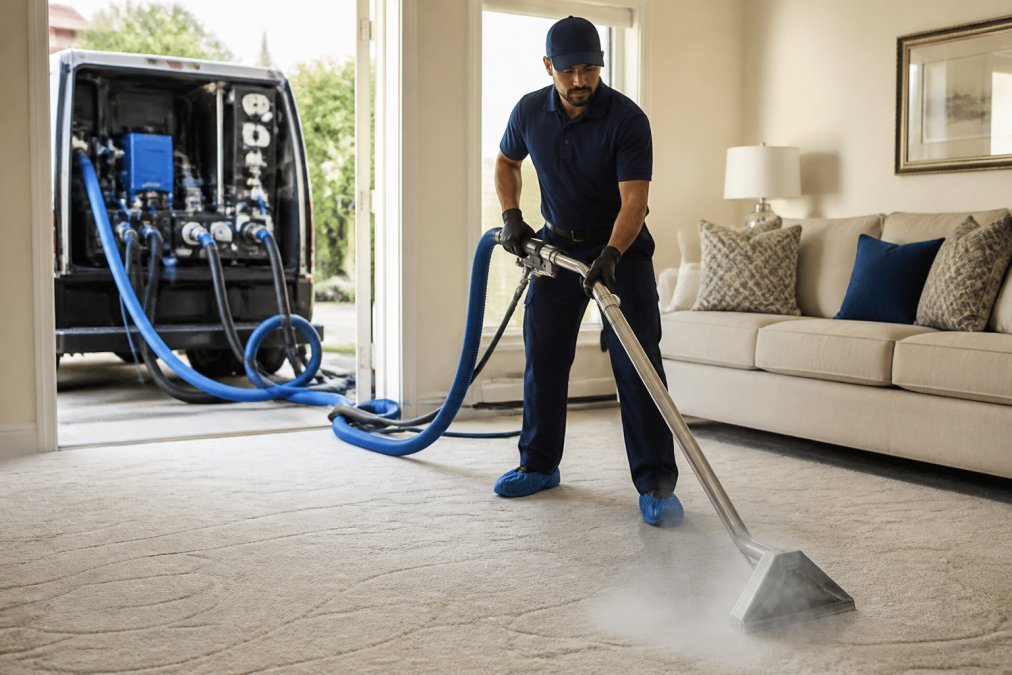
The process relies on oxidizing agents that react with organic matter. When the oxygen compound meets a stain or odor source, it breaks the molecular bonds holding the soil to the fiber, lifting it away by extraction.
The Chemistry in Plain English
Think of it as a controlled reaction. The cleaning solution carries an oxygen compound that becomes active when mixed with water, targeting organic soils like pet urine, food spills, and body oils. The reaction neutralizes the odor source at a molecular level rather than masking it with fragrance.
The key safety factor is pH balance. Many traditional cleaners are highly alkaline, which can weaken carpet fibers over time; oxygen-based solutions sit closer to neutral. Dwell time is also carefully managed; leave it too long and even a gentle solution can affect colorfastness.
Is It Safe for Your Carpet Fibers?
For most residential carpets, oxygen infused carpet cleaning is safe when applied correctly. The primary risks are improper concentration, excessive moisture, or inadequate rinsing. Synthetic fibers like nylon and polyester respond particularly well because they are solution-dyed and resistant to bleaching agents.
Wool is the exception that requires caution. It is a natural protein fiber sensitive to high pH and aggressive oxidizing agents. A professional will test for colorfastness before proceeding and adjust the solution concentration.
Fiber-Specific Compatibility Matrix
| Carpet Fiber | Oxygen Cleaning Safety | Key Consideration |
|---|---|---|
| Nylon | High | Solution-dyed fibers resist fading; rinse thoroughly |
| Polyester | High | Excellent stain resistance; low moisture retention |
| Olefin (Polypropylene) | High | Resists moisture and mildew; safe for indoor-outdoor |
| Wool | Moderate | Test colorfastness first; use reduced concentration |
| Triexta | High | Durable and stain-resistant; safe with neutral pH |
| Cotton | Low | Absorbs water; risk of shrinkage and residue |
The pattern is clear: synthetic fibers are the safest candidates, while natural fibers demand a more careful approach. This aligns with guidance from The Carpet and Rug Institute's cleaning standards which emphasizes matching the cleaning method to the fiber type.
The Benefits of Oxygen-Infused Carpet Cleaning
The advantages go beyond being a gentler option. For households with pets, children, or chemically sensitive individuals, the appeal is obvious. The method removes organic odors at the source, performing well on pet urine that has soaked into the padding.
Another benefit is reduced reliance on volatile organic compounds. Many traditional cleaning agents release fumes that linger for hours; oxygen-based systems use non-toxic components safer for indoor air quality.
The cleaning solution concentration is also easier to control. Because the active ingredient does the work, technicians can use less surfactant, meaning less soapy residue left behind.
How Long Does Carpet Take to Dry After Professional Cleaning?
Drying time depends on the extraction method, not just the cleaning solution. Traditional steam cleaning can leave carpets wet for 12 to 24 hours; truck-mounted systems can reduce that window to 2 to 4 hours (carpet-rug.org).
This matters for more than convenience. Excess moisture in the carpet pile can wick back up from the padding, carrying dissolved soils to the surface. Faster drying reduces this wicking effect and prevents mold or mildew in the underlay.
For offices that cannot shut down for a day, or homes where kids play on the floor, fast dry times are a practical necessity.
Non-Toxic Carpet Cleaning Solutions vs. Traditional Chemicals
The difference between non-toxic carpet cleaning solutions and traditional chemicals comes down to what is left behind. Traditional alkaline cleaners often require a separate rinse cycle to remove soap residue; if incomplete, the residue acts like a magnet for new dirt.
Oxygen-based solutions break down into harmless byproducts, reducing the need for aggressive rinsing and lowering the risk of chemical sensitivity reactions.
Many providers now advertise green solutions, but the term is used loosely. A truly non-toxic approach avoids harsh solvents and artificial fragrances. The Environmental Protection Agency's Safer Choice program provides a framework for identifying products that meet stricter safety standards for both human health and the environment.
Protecting Your Manufacturer Warranty
Carpet manufacturers often require professional cleaning at regular intervals to keep the warranty valid, but the method must comply with their guidelines. Using the wrong pH level or leaving excessive residue can void the warranty.
Most warranties specify cleaning must use the hot water extraction method, the technical term for steam cleaning. Oxygen infused carpet cleaning fits within this category as long as it uses extraction to remove water and soil. The key is ensuring the technician follows a warranty-safe protocol that documents the process.
This is where hiring a professional matters. A do-it-yourself rental machine often lacks the suction power to extract enough water, leaving the carpet wet and the warranty void. A professional truck-mounted system provides the suction needed to meet manufacturer requirements.
How to Test for Safety Before You Clean
A simple colorfastness test is a good start, but it won't tell you everything. The pH level of your cleaning solution is the single most important chemical factor in preventing fiber damage and color loss. Most oxygen-based cleaners are formulated near neutral (pH 7), but "oxygen-infused" is not a regulated term, and some products are surprisingly alkaline. Here is a practical guide to testing both your carpet and your cleaning solution before a full-room treatment.
Step 1: Gather Your Testing Supplies
You will need a few inexpensive items you likely already have at home:
- pH test strips (available at any pool supply store or pharmacy; look for strips with a range of 1 to 14 and a resolution of at least 0.5 pH units)
- A clean, white cotton cloth (an old white t-shirt works well)
- A small spray bottle filled with plain water
- A timer or your phone
- A magnifying glass (optional, but helpful for inspecting fiber damage)
Step 2: Test the Cleaning Solution's pH
Before the solution touches your carpet, test it in the bottle. Dip a pH strip into the mixed solution (at the exact dilution ratio recommended on the label) and wait the time specified on the strip's packaging, usually 15 to 30 seconds. Compare the color change to the chart on the box.
- pH 6.5 to 7.5: This is the safe zone for virtually all carpet fibers, including wool. Most professional-grade oxygen cleaners fall here.
- pH 8 to 9: This is mildly alkaline. It is generally safe for solution-dyed synthetics like nylon and polyester, but you should proceed with caution on wool or any carpet with unknown dye lots.
- pH 10 or higher: This is a high-alkaline solution. Do not use it on wool, and be aware that even on synthetics, a high-pH cleaner requires a thorough acidic rinse to neutralize the alkalinity and prevent residue buildup. If your product tests this high, dilute it further or switch to a different product.
Step 3: Test the Carpet's Colorfastness
Now that you know your solution's pH, test the carpet itself. Find a hidden area, such as inside a closet or under heavy furniture. Apply a small amount of your cleaning solution to the white cloth and blot the carpet firmly for about 10 seconds.
- Check the cloth: If any color transfers to the white cloth, your carpet is not colorfast. Stop immediately. Do not proceed with any wet cleaning method on this carpet without consulting a professional who specializes in natural fiber care.
- Check the carpet: Wait 5 minutes, then inspect the test spot with your magnifying glass. Look for any change in the fiber's texture, such as fraying, curling, or a rough feel. Also look for any dulling or lightening of the color compared to the surrounding area.
Step 4: Test the Dwell Time Reaction
Oxygen cleaners need time to work, but too much dwell time can be damaging. Apply a small amount of solution to the test area and let it sit for the maximum time recommended on the label (often 10 to 15 minutes). Do not let it dry. After the dwell time, blot the area dry with a clean, dry white cloth.
- Inspect again: Compare the test area to the surrounding carpet. If the color looks faded or the fibers feel stiff or brittle, the dwell time is too long for this carpet, and you should reduce it significantly for the full cleaning.
Step 5: Document Everything
This is the step most homeowners skip, and it is the one that protects your warranty. Take a photo of the pH strip next to the color chart showing your result. Take a photo of the colorfastness test area before and after. Write down the product name, dilution ratio, and dwell time. Store these records with your carpet's warranty paperwork.
This testing protocol takes about 15 minutes and costs less than $10 in supplies. It is the difference between guessing and knowing, and it directly addresses the most common cause of oxygen-cleaning damage: applying a solution too alkaline for the fiber.
Common Mistakes That Cause Damage
The most common mistake is over-wetting the carpet. A homeowner using a rental machine often passes over the same spot too slowly, saturating the padding. The padding holds moisture for days, leading to mold growth and a musty odor worse than the original stain.
Another error is using the wrong cleaning solution concentration. More is not better. Excess solution leaves a sticky residue that attracts dirt and can discolor the carpet over time. Soil suspension requires the right balance of chemistry and water, not a stronger dose.
Spot treatment is another area where damage occurs. Rubbing a stain vigorously can crush the carpet pile and spread the stain. The correct approach is to blot, not rub, and to use a solution matched to the stain type.
The Sticky Residue Problem: A Step-by-Step Rinsing Protocol
The most frequent complaint about oxygen-based cleaning is not fading or fiber damage; it is the sticky, tacky feeling that appears a few days after cleaning. This residue is not caused by the oxygen compound itself, which breaks down into harmless byproducts. It is caused by the surfactants and suspending agents that carry the oxygen compound. If these are not fully extracted, they remain in the pile and act like a magnet for new dirt.
Here is the proper extraction and rinsing sequence that prevents this problem:
Step 1: The Initial Application
Apply the oxygen cleaning solution at the manufacturer's recommended dilution. Do not pre-mix a stronger batch thinking it will clean better. The solution needs to be wet enough to reach the base of the pile but not so wet that it penetrates into the padding. A good rule of thumb is that the carpet should feel damp, not soaked.
Step 2: The Agitation Pass
After the recommended dwell time (usually 5 to 10 minutes for oxygen cleaners), use a carpet brush or the agitation setting on your machine to work the solution through the pile. This step is critical. Oxygen chemistry breaks the bond between soil and fiber, but agitation physically lifts the soil into suspension. Skipping this step leaves soil trapped at the base of the pile.
Step 3: The First Extraction Pass
This is the pass that removes the bulk of the solution and the suspended soil. Move the extraction wand slowly enough to suction up the liquid but not so slowly that you soak the carpet. A typical pace is about 1 foot per 3 to 4 seconds. Overlap each pass by about 2 inches to avoid wet streaks.
Step 4: The Plain Water Rinse Pass
This is the step that separates professional results from DIY disappointment. Fill your machine's clean water tank with plain water only, no cleaning solution. Make a full pass over the carpet exactly as you did in Step 3. This plain water flushes the remaining surfactant residue out of the pile and toward the surface, where the vacuum can extract it.
Step 5: The Final Extraction Pass
After the rinse pass, make one more pass with the vacuum but without spraying any water. This is the drying pass. Its purpose is to pull as much moisture as possible out of the carpet and padding. On a truck-mounted system, this pass achieves the 2-to-4-hour dry time. On a rental machine, this pass prevents the musty odor that develops when padding stays wet for 24 hours.
Step 6: The Residue Check
Wait 24 hours, then feel the carpet with the back of your hand. It should feel soft and slightly rough, not tacky or sticky. If it feels sticky, the rinse passes were insufficient. Repeat Steps 4 and 5. Do not apply more cleaning solution; the problem is not insufficient soap, it is insufficient water.
This six-step protocol addresses the most common failure mode of oxygen-based cleaning. The chemistry is sound; the residue problem is almost always a mechanical extraction issue, not a chemical one.
The Bottom Line on Safety
So, is oxygen infused carpet cleaning safe? For the vast majority of synthetic carpets, yes, it is one of the safest deep cleaning methods available. The chemistry is gentler on fibers, the non-toxic profile is better for indoor air quality, and the method addresses odors at the source. The risks appear only when the process is mishandled: wrong concentration, excessive moisture, or skipping the colorfastness test.
If you are weighing options for your home or office, the safest path is to work with a provider who understands fiber compatibility and uses professional-grade extraction equipment. The difference between a rental machine and a truck-mounted system is not just speed; it is the difference between a clean carpet and one that stays clean.
Frequently Asked Questions
Can oxygen-infused cleaners damage delicate carpet fibers?
When used correctly on most synthetic carpets like nylon and polyester, oxygen-infused cleaning is safe. The risk increases with natural fibers like wool, which can be sensitive to alkaline solutions. The oxidation process can also affect carpets that are not colorfast. A professional should always test for colorfastness and adjust the solution concentration based on your specific fiber type to prevent fiber damage or bleaching.
Does oxygen-infused cleaning leave behind toxic residues?
No, this is a primary benefit of the method. Oxygen-infused solutions break down into oxygen and water, leaving no soapy or chemical residue behind. This is a key difference from traditional cleaners that can leave a sticky film which attracts dirt. The lack of residue is what makes it a popular non-toxic carpet cleaning solution for households with children, pets, or individuals with chemical sensitivities.
Is oxygen-based carpet cleaning better than traditional steam cleaning?
Oxygen-infused cleaning excels at lifting deep, set-in organic stains and neutralizing odors without harsh chemicals. Traditional hot water extraction is excellent for general soil suspension and rinsing. The best professional results often combine both: oxygen-infused solutions break down the stain, and the truck-mounted extraction method thoroughly rinses it away. This dual approach cleans deeper while ensuring fast drying times.
How long does it take for carpets to dry after oxygen-infused cleaning?
With professional truck-mounted equipment, drying times are significantly faster than with portable machines. Most carpets dry within 2 to 4 hours, though airflow, humidity, and carpet pile affect this. Oxygen-infused solutions use less water, and powerful extraction removes most of the moisture. This is a major advantage for offices or busy homes that cannot be shut down for a full day.
Choosing the right cleaning method protects your investment and your family's health. Certified SteemPro combines over 20 years of experience with 100% non-toxic, green-certified solutions and truck-mounted, oxygen-infused technology. Our process delivers deep stain and odor removal with fast dry times, so your carpets are ready for foot traffic the same day. Get started with Certified SteemPro and schedule a cleaning that is safe for your carpets, your family, and your warranty.