 blog
blog
Best Eco Friendly Upholstery Cleaners Riverside 2026
Table of Contents
- Eco Friendly Upholstery Cleaning in Riverside: What to Look For
- How Much Does Professional Upholstery Cleaning Cost?
- Pet-Safe Upholstery Cleaning Methods That Remove Odor for Good
- Upholstery Cleaning Dry Time Expectations and Fast-Dry Technology
- Fabric-Specific Requirements: Not Every Couch Needs the Same Method
- DIY Eco-Friendly Spot Treatment Guide for Pet Accidents and Stains
- Indoor Air Quality and Upholstery: What Health-Conscious Families Should Know
- Conclusion
- Frequently Asked Questions
Last Updated: September 18, 2026
Eco Friendly Upholstery Cleaning in Riverside: What to Look For
Finding the best eco friendly upholstery cleaners in Riverside starts with understanding what "green" actually means on a service label. This guide from Certified SteemPro breaks down the certifications, equipment, and methods that separate genuine eco-friendly cleaning from marketing claims.
Eco friendly upholstery cleaning removes soil, stains, and odors using solutions that avoid harsh solvents, volatile organic compounds, and toxic residues, cleaning fabric thoroughly without leaving behind chemicals that affect your family, pets, or indoor air.
Most cleaning companies advertise "green" service, but fewer can explain what makes their process safer. Below, we'll show you how to evaluate a provider, what certifications matter, and which questions expose a company that is guessing.
Green Certifications That Actually Mean Something
A meaningful green certification comes from an independent body that audits products or processes, not from a logo a company designs itself. Look for third-party verification such as Safer Choice recognition from the EPA Safer Choice program, which reviews ingredient safety, or Green Seal certification, which sets environmental standards for cleaning products and services.
Ask any provider three questions before booking:
- Which specific products do you use, and who certifies them?
- Are the solutions biodegradable and free of added fragrances or dyes?
- Can you show documentation, not just a badge on a website?
A company that answers clearly has done the work; one that deflects is telling you something too.
Truck-Mounted Hot Carbonating Extraction Explained
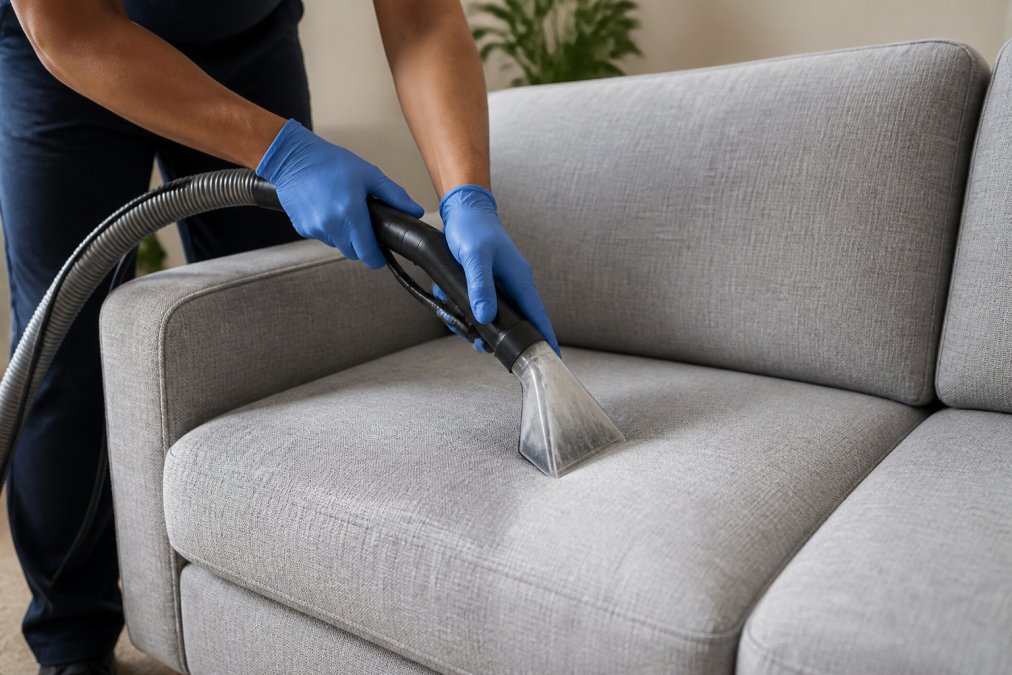
Hot carbonating extraction uses heated, oxygenated solution and pressurized extraction to lift soil out of upholstery fibers. Truck-mounted equipment generates far more heat and suction than portable units, meaning faster soil extraction and less moisture left behind.
The carbonating action breaks the bond between soil and fabric: heated solution penetrates the cushion, loosens embedded debris, and the extraction wand pulls it away. Because it relies on heat, agitation, and suction rather than harsh chemicals, it pairs naturally with biodegradable, non-toxic solutions.
How Much Does Professional Upholstery Cleaning Cost?
Professional upholstery cleaning cost depends on the number of pieces, fabric type, level of soiling, and add-ons like deodorizing or fiber protection. Because those variables shift from home to home, most reputable providers quote per job rather than publishing a flat rate.
The Four Cost Drivers
1. Piece count and size. A single armchair is the smallest job; a three-seat sofa is roughly double a loveseat's fabric surface. A sectional with a chaise or L-shape can run two to three times a standard sofa due to extra cushions, seams, and fabric area. Most providers price per seat or piece, then discount for volume.
4. Add-on treatments. Common add-ons include:
- Enzyme deodorizing for pet odor
- Upholstery sanitization (often using an EPA-registered disinfectant)
- Fiber protection or stain-guard application
- Mattress cleaning if bundled with furniture
Why Flat Phone Quotes Are a Red Flag
A company that quotes a firm price before seeing your furniture is either overcharging to protect itself against the worst case or underestimating the work and will upsell on arrival. Neither is good for you.
What to Compare Beyond Price
When you compare quotes, compare the method too. A cheaper quote using a portable low-suction machine may leave cushions damp for a day and pull less soil than a truck-mounted hot carbonating extraction system, not a bargain if the result does not last. Ask what equipment and solutions each provider uses and how long the fabric will take to dry, then compare total value, not just the bottom line.
Pet-Safe Upholstery Cleaning Methods That Remove Odor for Good
Pet-safe cleaning removes odor at the source rather than masking it with fragrance. Urine soaks through fabric into the cushion and pad below, so surface cleaning alone never solves the problem.
Upholstery Cleaning Dry Time Expectations and Fast-Dry Technology
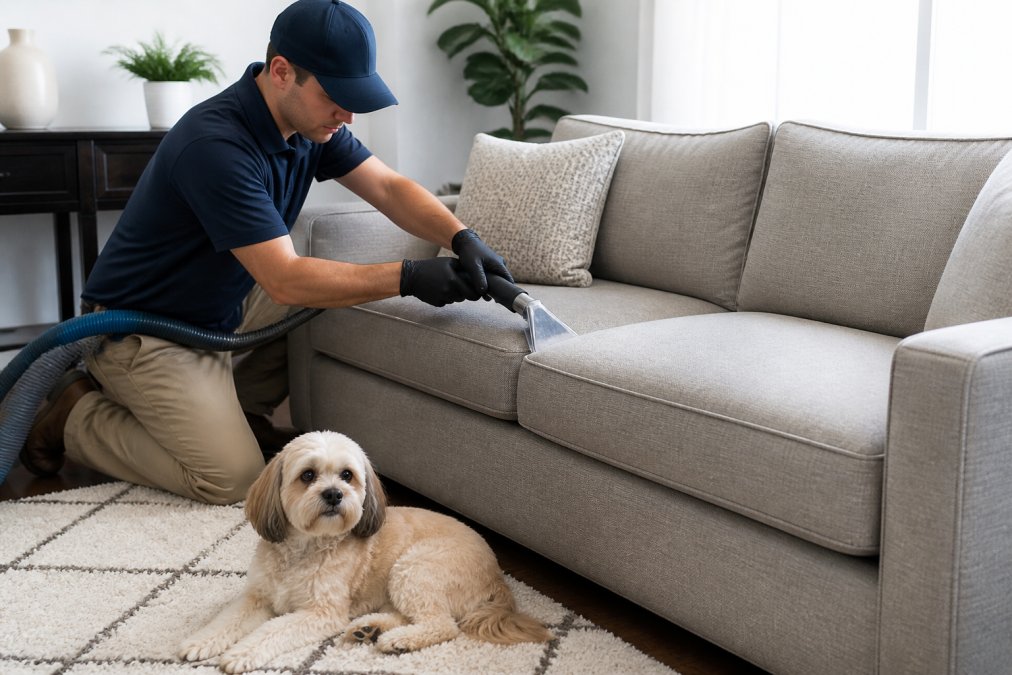
Upholstery cleaning dry time expectations run from four to six hours with proper truck-mounted extraction, versus a day or more with low-powered portable units. The difference is suction strength and how much moisture the equipment leaves behind.
Fabric-Specific Requirements: Not Every Couch Needs the Same Method
Upholstery fabric care is not one-size-fits-all. Cotton and linen tolerate water-based cleaning well, but silk, rayon, and some blends can water-spot or shrink and need a low-moisture or dry cleaning approach. This is the section most cleaning company pages skip, and the one that determines whether your furniture survives the job.
How to Identify Your Fabric Before You Book
Every piece of upholstered furniture sold in the United States carries a cleaning code, usually on a tag under a cushion or on the frame. The codes come from the furniture industry and tell you what method is safe:
- W, Water-based cleaning is safe. Most cotton, linen, polyester, and olefin fabrics fall here.
- S, Solvent-based (dry) cleaning only. Common for silk, rayon, and some velvets. Water can cause rings, shrinkage, or browning.
- WS, Either water or solvent is safe. The most flexible category.
- X, Vacuum or light brush only. No liquid cleaner of any kind. Often found on some viscose and specialty blends.
Fabric-by-Fabric Cleaning Requirements
| Fabric Type | Recommended Method | Watch Out For |
|---|---|---|
| Cotton, linen | Hot water extraction | Shrinkage if over-wet; pre-test for colorfastness |
| Polyester, olefin, nylon | Steam cleaning, deep extraction | Heat sensitivity on low-melt synthetics |
| Silk, rayon, viscose | Low-moisture or dry (solvent) method | Water spotting, shrinkage, browning |
| Velvet, velour | Dry solvent or low-moisture foam | Crushing the pile; use a soft brush only |
| Wool blends | Low-moisture, pH-balanced | Felting and shrinkage from heat and agitation |
| Leather, faux leather | pH-balanced cleaner, conditioning | Cracking if dried out; never saturate seams |
| Microfiber | Hot water extraction, low heat | Over-wetting can flatten the nap |
Why Delicate Fabrics Need a Different Process
Silk, rayon, and viscose are cellulosic or protein-based fibers that react to water differently than synthetics. Wet rayon loses tensile strength and can stretch or shrink permanently; silk water-spots because it absorbs moisture unevenly, leaving tide lines. Velvet and velour have a raised pile that crushes under a standard extraction wand and does not fully recover.
Why This Matters for Your Quote
Getting this wrong causes damage no cleaning can reverse, which is why a provider who asks about your fabric before quoting beats one who quotes a flat price on the phone.
DIY Eco-Friendly Spot Treatment Guide for Pet Accidents and Stains
- Blot the excess. Press a clean cloth into the spot. Do not rub.
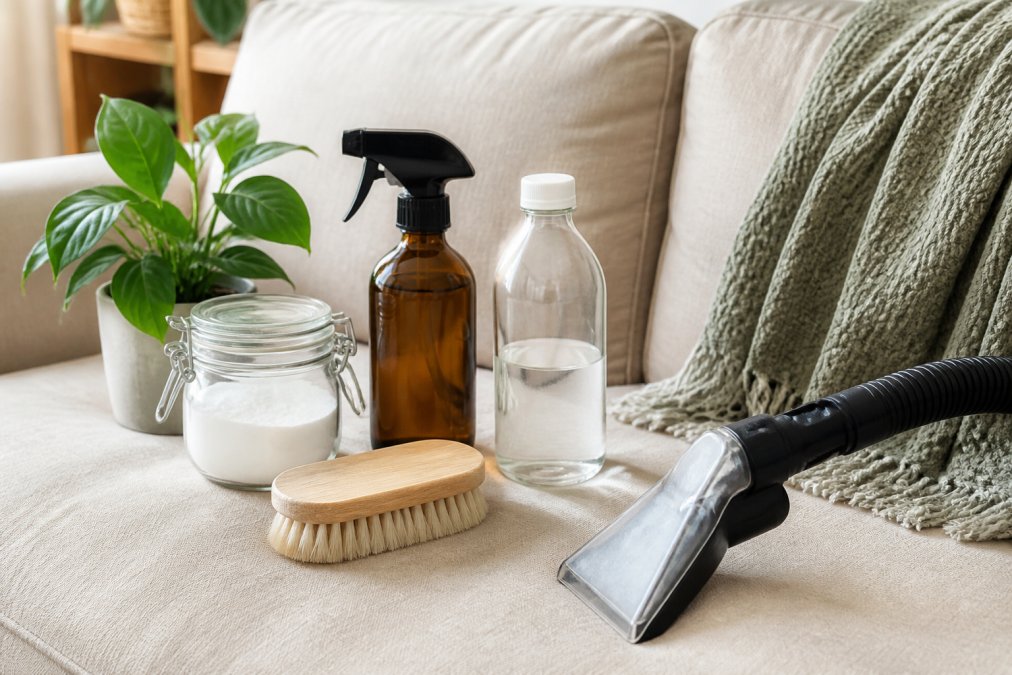
- Mix the solution. Combine one cup warm water, one tablespoon white vinegar, and a few drops of mild dish soap.
- Apply and dwell. Dab the solution onto the spot and let it sit for five minutes.
- Blot again. Press with a dry cloth to lift the loosened soil.
- Rinse with water. Remove soap residue so it does not attract new dirt.
- Air dry. Keep the area ventilated and avoid direct heat.
This approach handles surface spills. Set-in stains, heavy soiling, and odor that has soaked into the cushion need professional extraction to resolve fully.
Indoor Air Quality and Upholstery: What Health-Conscious Families Should Know
Upholstery acts as a filter for your home, trapping dust, pollen, pet dander, and other particles. Over time that buildup releases back into the air, which is why allergen reduction and indoor air quality are directly linked to how often you clean your furniture.
Conclusion
Choosing the best eco friendly upholstery cleaners in Riverside comes down to asking the right questions about certifications, equipment, and method, not just comparing quotes. The provider who explains their process and inspects your fabric before pricing is the one worth hiring.
Frequently Asked Questions
What should I look for when hiring an eco-friendly upholstery cleaner in Riverside?
Look for green certifications that verify third-party testing, not just 'natural' labels. Ask whether the provider uses biodegradable solutions, truck-mounted hot carbonating extraction, and non-toxic cleaning methods safe for pets and children. Confirm licensing and insurance in writing. A reputable eco friendly upholstery cleaner will explain their process, offer a walkthrough of your fabric types, and provide a written quote before starting.
Are non-toxic upholstery cleaners as effective as chemical ones?
Yes, when the method is right. Truck-mounted hot carbonating extraction combined with biodegradable solutions lifts embedded soil, allergens, and pet residue from deep within fibers. The key is the equipment and dwell time, not harsh chemicals. Many chemical-free and oxygen-infused systems achieve residue-free results that leave fabric soft and odor-free, often outperforming consumer-grade spot sprays that only treat the surface.
How long does upholstery take to dry after professional cleaning?
With truck-mounted oxygen-infused equipment and controlled moisture, most upholstery dries in 2 to 4 hours. Traditional methods that over-wet fabric can take 12 to 24 hours and risk mildew. Ask your provider about their dry time expectations and whether they use air movers. Faster dry times mean you can use your furniture the same day and avoid the damp smell that comes from trapped moisture.
Does professional upholstery cleaning remove pet urine odor permanently?
It can, if the treatment reaches the padding and subfloor where uric acid crystals sit. Surface shampooing only masks odor temporarily. A pet-safe upholstery cleaning method uses enzyme-based or oxygen-infused solutions that break down uric acid at the source, followed by hot carbonating extraction to pull residue out. For long-standing accidents, ask the technician to inspect and treat the cushion core, not just the cover.