 how-to
How to Remove Pet Vomit Stains from Upholstery
Table of Contents
- Safety First: Check Your Upholstery Care Label and Test Cleaners
- Step 1: Remove Solid Debris and Blot Liquid from Pet Vomit Stains
- Step 2: How to Clean Vomit from a Couch with DIY Solutions
- Step 3: How to Remove Dog Vomit Smell from Upholstery
- Step 4: Best Cleaner for Pet Vomit Stains and When to Use Enzyme Products
- Step 5: How to Remove Old Vomit Stains from a Couch
- When to Call a Professional Upholstery Cleaner
- Frequently Asked Questions
Last Updated: October 5, 2026
Safety First: Check Your Upholstery Care Label and Test Cleaners
Pet vomit stains are one of the toughest messes a home can face, and the way you treat them in the first five minutes often decides whether the fabric survives.
Before you touch anything, find the care label on the underside of the cushion or the back of the sofa. It uses a letter code:
- W means water-based cleaners are safe.
- S means solvent cleaners only, never water.
- WS means either type works.
- X means vacuum only, no liquid at all.
If the label is missing, test any cleaner on a hidden spot first. Wait 10 minutes, then check for color bleed or fiber damage. Our team follows the same rule on every job, and the FTC guidance on fabric care labeling explains why those codes matter.
Step 1: Remove Solid Debris and Blot Liquid from Pet Vomit Stains
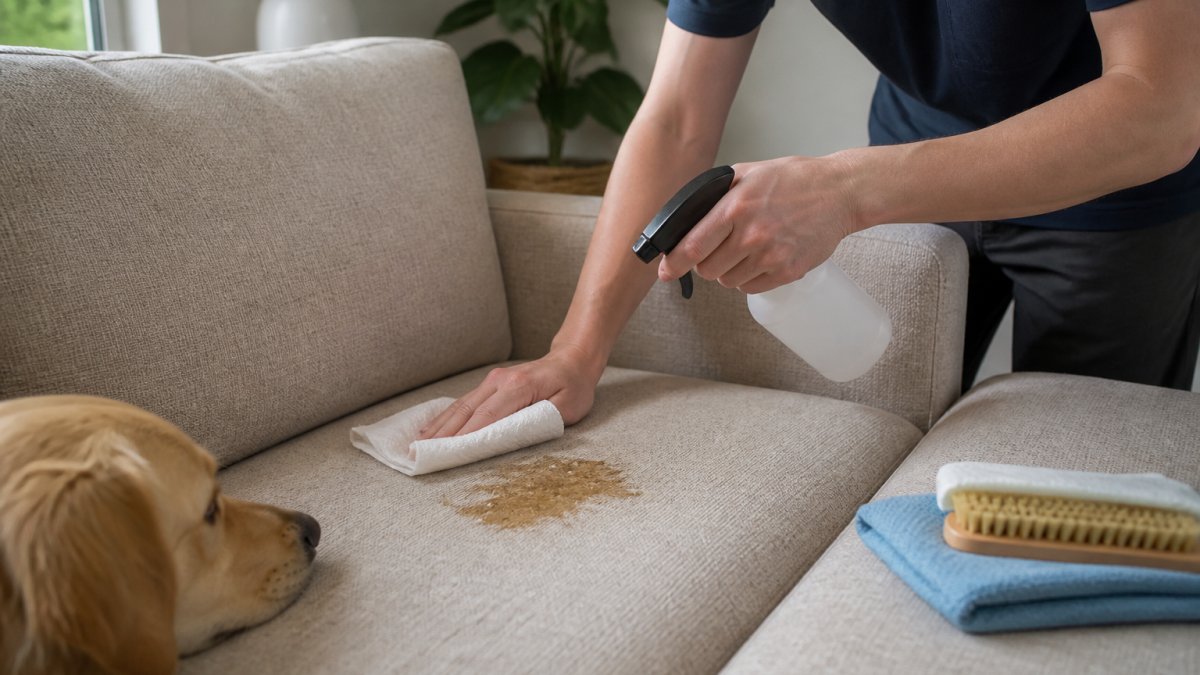
Speed matters more than strength here. Scoop up solids before they soak deeper into the fabric fibers.
- Put on gloves.
- Use a spoon or spatula to lift large pieces. Never rub.
- Scrape gently at a 45-degree angle.
- Blot the liquid with a clean paper towel or white cloth.
- Press down, lift, and repeat with a fresh section of towel.
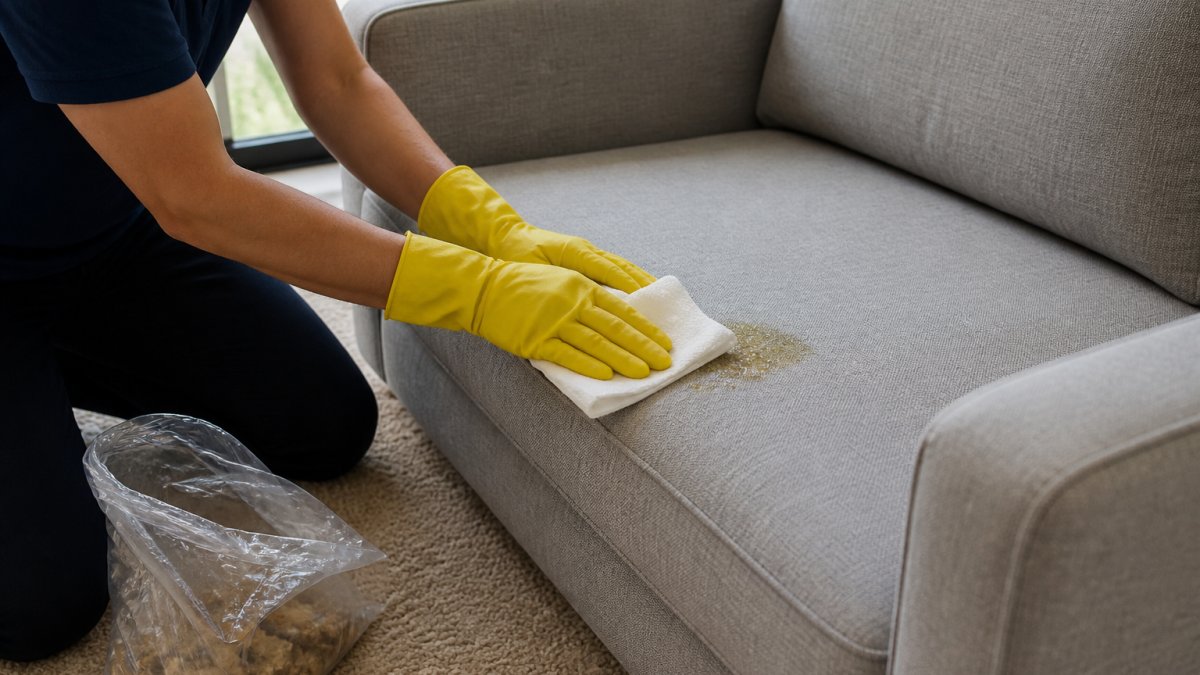
Work from the outside of the stain inward so you do not spread it. White terry cloth works best because dye from a colored towel can transfer onto damp fabric.
Step 2: How to Clean Vomit from a Couch with DIY Solutions
Most pet vomit stains come out with items already in your kitchen, but the solution you pick has to match both the stain and the fabric code you found on the care label. A recipe that works on a W-coded microfiber sofa can permanently set a stain or leave a water ring on an S-coded or natural-fiber cushion.
Match the Solution to the Care Code First
- W (water-based safe): dish soap, vinegar, and peroxide dilutions are all on the table.
- S (solvent only): skip every water-based recipe below. Use a solvent-based upholstery cleaner labeled for S codes, apply to a cloth, and blot. Water on an S-coded fabric can cause shrinkage, browning, or water rings that never come out.
- WS: either family works; start with the mildest option.
- X (vacuum only): do not apply any liquid. Vacuum thoroughly and call a professional.
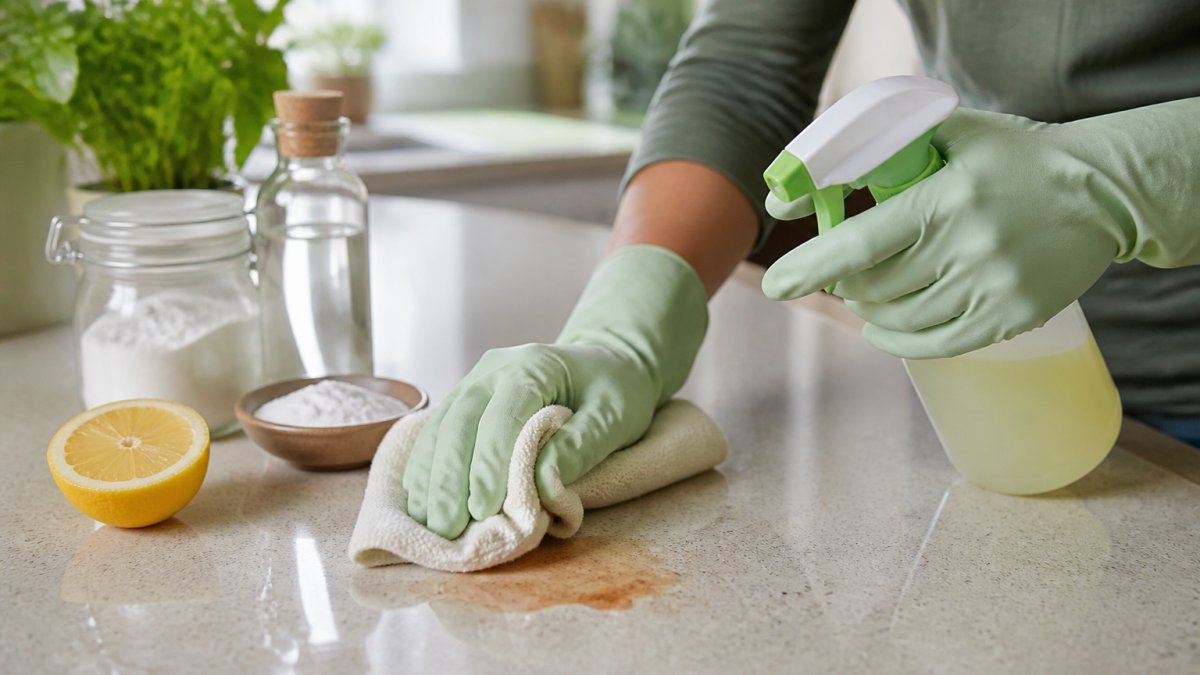
Mild Dish Soap and Warm Water
Mix one teaspoon of clear, dye-free, fragrance-free dish soap into two cups of warm water. Clear formulas matter, blue or yellow dyes can tint light fabric, and heavy fragrance can linger. Dampen a white cloth, dab from the outside of the stain inward, and let it sit for five minutes. Blot dry and repeat until the cloth lifts clean. Rinse the area with a cloth dampened in plain water to pull soap residue out of the fibers; leftover soap attracts dirt and can leave a sticky patch that re-soils fast.
White Vinegar Solution
Combine equal parts white vinegar and water in a spray bottle. Vomit residue is acidic, and vinegar's acetic acid helps break down the sticky proteins and fats while its low pH slows odor-causing bacteria. Spray lightly, wait 10 minutes, then blot. Vinegar scent fades as it dries, but on S-coded or silk-blend fabric, skip it and use a solvent cleaner instead.
Hydrogen Peroxide for Tough Stains
Peroxide is a mild bleach and an oxidizer, it works by breaking apart the pigment molecules in the stain. Use it only on light-colored, colorfast fabric, and only after a patch test. Apply a small amount to a cloth (never directly to the cushion), dab the stain, and let it sit no more than 10 minutes. Rinse with a damp cloth afterward.
| Solution | Best For | Sit Time | Watch Out For |
|---|---|---|---|
| Dish soap + water | Fresh, mild stains on W or WS fabric | 5 minutes | Soap residue if not rinsed; dyes and fragrance in the soap |
| Vinegar + water | Odor and acidic residue on W or WS fabric | 10 minutes | Scent lingers briefly; not for S-coded or delicate fabric |
| Hydrogen peroxide | Set-in stains on light, colorfast fabric | Up to 10 minutes | Bleaching dark colors; fiber weakening on wool or silk |
| Solvent upholstery cleaner | Any S-coded fabric | Per label | Flammable; ventilate the room and keep pets away |
Patch Test Before You Commit
On a hidden area, the back of the cushion, the underside of a skirt, or an inside seam, apply a small amount of your chosen solution, wait 10 minutes, then blot dry and check for color bleed, ring marks, or fiber change. If the fabric puckers, lightens, or the dye transfers to your cloth, stop and switch methods. This 10-minute test is the single cheapest insurance against a permanent mistake.
Keep Pets Off Until the Fabric Is Dry
Most DIY solutions leave residue that is harmless to people but can irritate a pet's paws, nose, or mouth. After blotting, rinse with a clean damp cloth, blot again, and keep the pet off the cushion until it is fully dry to the touch, usually several hours, longer in humid weather. If you used a solvent cleaner, ventilate the room and keep pets out until the odor of the solvent is gone.
Step 3: How to Remove Dog Vomit Smell from Upholstery
Odor is not a surface problem. The smell you notice on a humid day is off-gassing from biological residue, proteins, fats, and bacteria, that soaked past the fabric and into the foam or filling. Masking it with baking soda or a scented spray works for a day or two, then the smell returns because the source is still there. Removing the odor means removing the residue and drying the interior completely.
Why Baking Soda Alone Is Not Enough
Baking soda is a mild deodorizer. It neutralizes some surface acids and absorbs a little moisture, which is why it helps with light, fresh odors. It does not break down proteins or kill the bacteria producing the smell, so on a stain that soaked into the cushion, it buys you time rather than solving the problem. Use it as a finishing step after the residue is gone, not as the main treatment.
Enzyme Cleaners: The Biological Fix
Enzyme cleaners contain cultures that produce enzymes targeting proteins, fats, and starches, the exact compounds in pet vomit. The key variable is contact time. Most enzyme products need the surface to stay damp for 10 to 30 minutes, and some set-in odors respond better to a longer dwell with the area covered in plastic wrap to slow evaporation. Read the label and follow its dwell time; cutting it short is the most common reason enzyme treatments fail.
A few practical rules:
- Apply to a cloth or spray lightly, do not flood the cushion.
- Keep the area damp for the full dwell time; re-mist if it starts to dry.
- Blot up the residue afterward with a clean white cloth. Enzyme residue left in the fabric can attract dirt and, in some cases, irritate pets.
- Rinse with a cloth dampened in plain water, then blot again.
- For deep or old odors, a second application after the first dries is often more effective than one long soak.
Drying Is Half the Job
Trapped moisture is the reason odors come back. If the foam stays damp, bacteria keep working and the smell returns. After treatment:
- Blot as much moisture out as you can with dry white towels, pressing firmly.
- Stand the cushion on edge and, if it is removable, unzip the cover and let the foam air out separately.
- Run a fan or a dehumidifier near the cushion, or place it in a dry, well-ventilated room. Direct sun can fade fabric, so use airflow rather than heat.
- Do not put the cushion back on the sofa until the foam is dry all the way through, press the center with your palm; if it feels cool or damp, keep drying.
When Odor Keeps Coming Back
If the smell returns after a full enzyme treatment and a complete dry, the residue has likely reached the foam or the sub-frame. At that point, surface cleaning cannot reach it. A professional with extraction equipment can flush the cushion interior and pull the residue out, which is usually the difference between a temporary fix and a permanent one.
Step 4: Best Cleaner for Pet Vomit Stains and When to Use Enzyme Products
The best cleaner for pet vomit stains depends on the stain's age and what caused it. Fresh stains respond to soap and vinegar. Old or protein-heavy stains need enzymes.
Enzyme cleaners use live bacteria to break down the proteins in vomit and pet waste. They work slowly, so give them 15 to 30 minutes of sit time before blotting.
This is where professional help pays off. Our green-certified, oxygen-infused solutions lift deep residue without leaving chemical traces behind, which matters in homes with kids, allergies, or chemical sensitivities.
Step 5: How to Remove Old Vomit Stains from a Couch
Dried stains need patience, not force. Rehydrate first, then treat in layers.
- Mist the stain with warm water and wait 10 minutes.
- Apply your chosen solution and let it sit longer than you would for a fresh stain.
- Blot, rinse, and repeat up to three times.
- Vacuum once fully dry.
If the stain still shows after three rounds, stop. Scrubbing a set-in stain can fray natural fibers and dull the color permanently.
When to Call a Professional Upholstery Cleaner
Some stains are beyond a spray bottle. Call a professional when the stain covers a large area, the odor keeps returning, or the fabric is silk, velvet, or another delicate material.
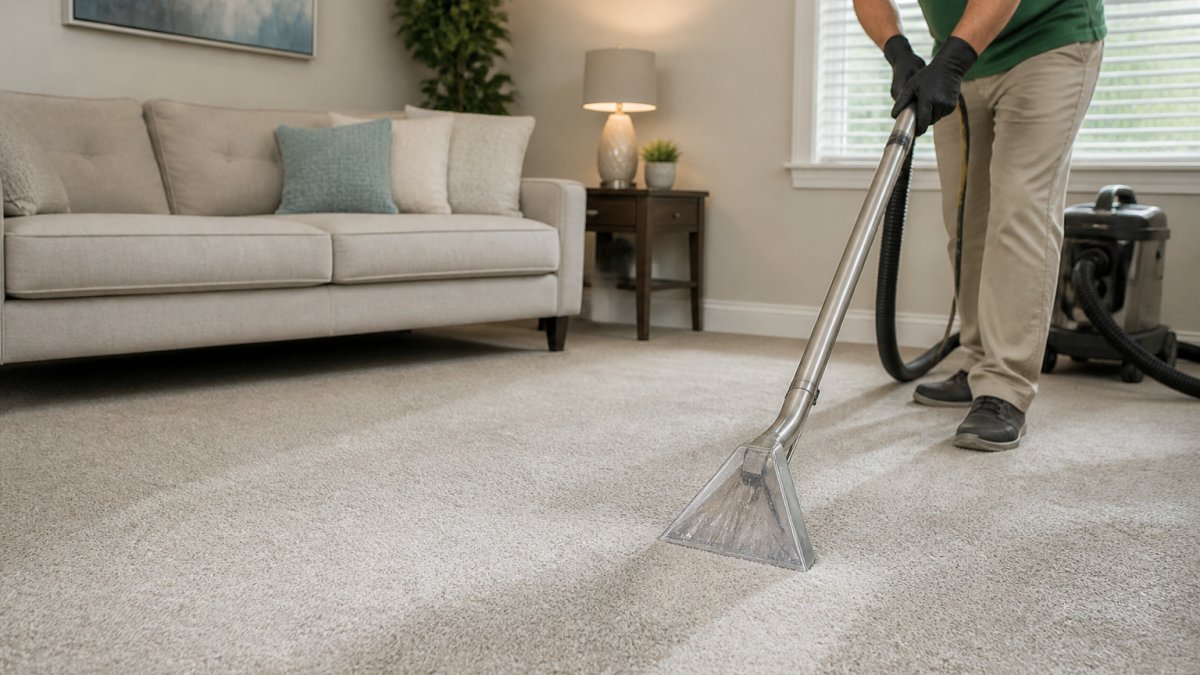
We bring truck-mounted, oxygen-infused equipment that reaches deep into cushion interiors and padding, where household tools cannot go. For pet owners dealing with years of accidents, this is often the difference between a temporary fix and a lasting one.
American Cleaning Institute fabric care resources offers more on matching methods to fabric types.
Frequently Asked Questions
Can old vomit stains be removed?
Yes, old vomit stains can often be removed, but they require more effort. Start by scraping off any dried residue, then apply an enzyme cleaner or a mixture of white vinegar and water. Let it sit for 10-15 minutes before blotting. For set-in stains, you may need to repeat the process. Always test on an inconspicuous area first.
What is the best stain remover for pet vomit?
Enzyme cleaners are the best for pet vomit because they break down proteins and eliminate odors at the source. For a DIY option, mix one tablespoon of mild dish soap with two cups of warm water. For tougher stains, a solution of equal parts white vinegar and water works well. Hydrogen peroxide can be used on colorfast fabrics, but test first.
Can Dawn dish soap help get out dog barf?
Yes, Dawn dish soap is effective for removing dog barf because it cuts through grease and organic matter. Mix a few drops with warm water, apply to the stain, and blot gently. Avoid scrubbing, which can push the stain deeper. Rinse with a clean damp cloth and dry thoroughly.
Will hydrogen peroxide remove old pet stains from carpet?
Hydrogen peroxide can lighten old pet stains, but it may also bleach some fabrics. Test it on a hidden area first. For carpet, mix one part hydrogen peroxide with three parts water, apply, and let sit for a few minutes before blotting. For upholstery, use with caution and only on colorfast materials.
Pet accidents will happen, but lingering stains and smells do not have to. Certified SteemPro removes deep-set pet vomit stains and odor with green-certified, oxygen-infused cleaning, backed by over 20 years of experience and a 100% satisfaction guarantee. Get started with Certified SteemPro and restore your upholstery to a fresh, healthy home again.