 how-to
Fast Drying Carpet Cleaning Methods That Work
Table of Contents
- Why Fast Drying Carpet Cleaning Methods Matter for Your Home
- Low Moisture Carpet Cleaning: A Speed-First Approach
- Typical Carpet Drying Time After Professional Cleaning
- How to Speed Up Carpet Drying After Any Cleaning Method
- Fast Drying Carpet Cleaning Methods: What to Ask Your Pro
- The Bottom Line on Quick-Dry Carpet Care
- Frequently Asked Questions
Last Updated: September 9, 2026
Why Fast Drying Carpet Cleaning Methods Matter for Your Home
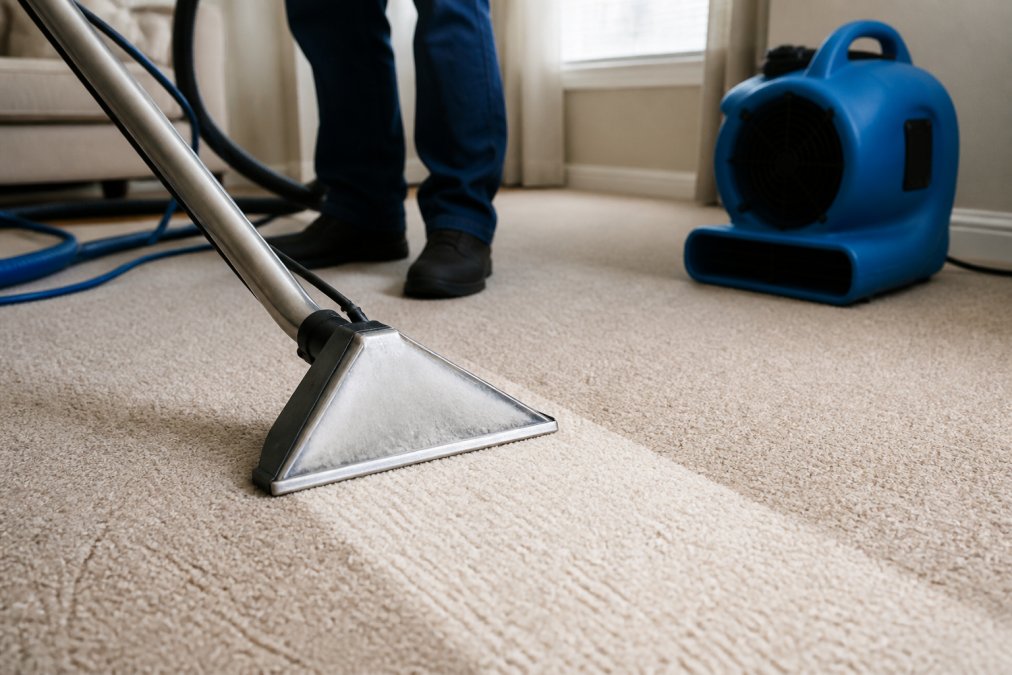
Waiting two days for carpets to dry after a cleaning isn't just an inconvenience. It disrupts your family's routine, forces you to navigate around damp furniture, and creates a environment where mold and mildew can take hold. Choosing fast drying carpet cleaning methods protects both your schedule and your indoor air quality, which is why the Certified SteemPro team prioritizes low-moisture approaches for every residential and commercial job we handle.
The core principle is simple: the less water left behind in your carpet pile, the quicker the drying window. Traditional steam cleaning relies on high volumes of water and powerful extraction, but even the best extraction leaves significant moisture deep within the carpet backing and padding. Fast drying carpet cleaning methods reduce that residual moisture at the source, using advanced technology to suspend and remove soil without saturating the fibers. For households with kids, pets, or chemical sensitivities, this speed also means less time exposed to damp conditions and any lingering cleaning agents.
Below, we'll break down the specific techniques that deliver quick results, what to expect from professional drying times, and the questions you should ask to guarantee a fast, safe outcome for your carpet fibers.
Low Moisture Carpet Cleaning: A Speed-First Approach
Low moisture carpet cleaning is a category of methods designed to use significantly less water than traditional hot water extraction. Instead of flooding the carpet, these systems rely on specialized machines that combine agitation, encapsulation chemistry, and minimal liquid to lift dirt from deep within the pile.
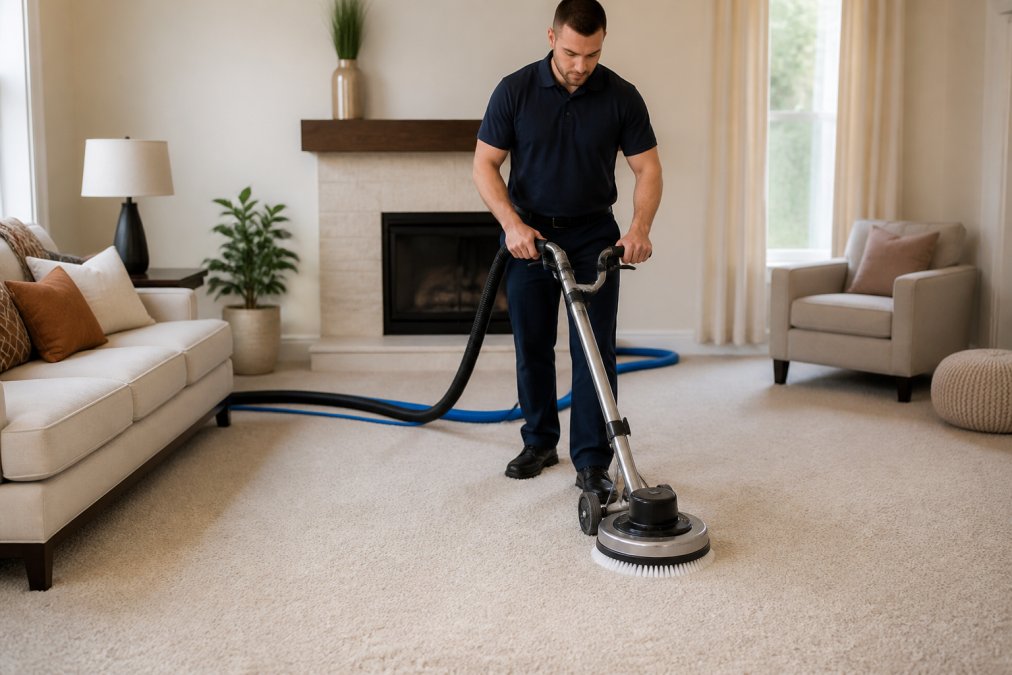
The most effective low-moisture systems use a cylindrical brush or counter-rotating reel that aggressively agitates the carpet fibers. This action, combined with the cleaning solution, breaks the bond between dirt and the fiber. This approach is particularly well-suited for office environments where downtime directly impacts productivity.
Typical Carpet Drying Time After Professional Cleaning
How long does carpet take to dry after professional cleaning? With fast drying carpet cleaning methods, most carpets are dry to the touch in one to three hours (carpet-rug.org). Traditional steam cleaning, by contrast, often requires anywhere from six to twenty-four hours, depending on ventilation, humidity, and carpet thickness (extension.umn.edu).
The drying time after professional cleaning depends on several variables. The extraction method used is the primary factor; a truck-mounted system with strong vacuum power removes more water than a portable unit. The carpet's construction also matters. Dense, plush carpets with a thick backing hold more moisture than low-pile commercial carpet, and the underlying padding acts as a reservoir that releases water slowly. Finally, environmental conditions like airflow and indoor humidity play a significant role in how quickly the remaining moisture evaporates.
How to Speed Up Carpet Drying After Any Cleaning Method
Even with professional-grade equipment, you can take steps to accelerate the drying process and get your home back to normal sooner. These techniques are safe for most carpet types and help prevent the musty odors that develop when moisture lingers.
- Maximize airflow immediately. Open windows and doors to create a cross-breeze, and point fans directly at the cleaned area. The goal is to keep air moving across the carpet surface constantly.
- Turn on your HVAC system. Running the furnace or air conditioner helps dehumidify the air, pulling moisture away from the carpet pile. If you have a standalone dehumidifier, place it in the room for the first few hours.
- Avoid walking on the carpet. Foot traffic compresses wet fibers and pushes moisture deeper into the backing, which significantly extends drying time. Keep pets and children off the area until it is completely dry.
- Use dry towels for spot absorption. If you notice pooling or excessively wet areas, press clean, dry towels into the carpet to absorb the excess water. Do not rub, as this can damage the fibers.
Fast Drying Carpet Cleaning Methods: What to Ask Your Pro
Not all cleaning companies use the same equipment, and the difference shows in your drying time. When you book a service, ask these questions to confirm you are getting a true low-moisture clean. The right professional will be able to answer each one clearly and confidently.
| Question to Ask | Why It Matters | What a Good Answer Sounds Like |
|---|---|---|
| "What extraction method do you use?" | Determines how much water is left behind | "We use a truck-mounted system with high-suction power" |
| "What is your estimated dry time?" | Sets expectations for your schedule | "Most carpets are dry in 1-3 hours" |
| "Is your cleaning solution non-toxic?" | Protects kids, pets, and sensitive individuals | "Yes, we use green-certified, oxygen-infused solutions" |
| "How do you handle high-pile carpet?" | Confirms they adjust technique for fiber type | "We adjust solution concentration and extraction passes" |
The answers you receive will tell you whether the company prioritizes speed and safety or simply follows a one-size-fits-all process. A provider using oxygen-infused, truck-mounted technology, like the system Certified SteemPro employs, often achieves faster drying because the cleaning chemistry is designed to break down and suspend soil with less water volume. This approach is also gentler on carpet fibers.
The Bottom Line on Quick-Dry Carpet Care
Choosing fast drying carpet cleaning methods is about more than convenience. It protects your carpet's structural integrity, prevents mold growth, and keeps your home safe for your family. Whether you opt for a professional low-moisture service or need to speed up a traditional clean, understanding the process helps you make an informed choice.
The challenge is finding a provider who combines speed with genuine, non-toxic cleaning power. Many services offer quick drying. At Certified SteemPro, our oxygen-infused, truck-mounted method delivers deep stain and odor removal with fast dry times, backed by over 20 years of experience and a 100% satisfaction guarantee. Get started with Certified SteemPro and schedule a cleaning that gets your carpets dry, fresh, and ready for life the same day.
Frequently Asked Questions
How long should carpets take to dry after professional cleaning?
With fast drying carpet cleaning methods like low moisture encapsulation, carpets can be dry in 1 to 2 hours. Traditional steam cleaning often requires 6 to 12 hours or more. The exact carpet drying time after professional cleaning depends on the method used, indoor humidity, airflow, and carpet padding. Ask your provider which method they use and what dry time you should expect before they start.
Are low-moisture carpet cleaning methods as effective as steam cleaning?
Yes, for routine maintenance and most stains. Low moisture carpet cleaning uses less water and relies on specialized solutions to suspend and extract dirt. For heavily soiled carpets or deep-set stains, a professional might recommend a truck-mounted steam cleaning with fast drying techniques instead.
What is the fastest way to dry carpets after cleaning?
To speed up carpet drying, maximize airflow immediately after cleaning. Open windows, turn on ceiling fans, and point floor fans directly at the wet carpet. Running your HVAC system or a dehumidifier also pulls moisture from the air and the carpet fibers. Avoid walking on the carpet until it is dry to prevent re-soiling. These steps work well with any professional method.
Do oxygen-infused cleaning methods dry faster than traditional steam?
Oxygen-infused cleaning is often paired with low moisture or encapsulation techniques, which use significantly less water than traditional steam cleaning. This reduced water volume directly translates to faster drying times, often within 1 to 2 hours. The oxygen action helps break down soils so less agitation and water are needed.