 ultimate-guide
Professional Upholstery Cleaning for Homes: 2026 Guide
Table of Contents
- Why Professional Upholstery Cleaning Matters for Your Home
- How Much Does Professional Upholstery Cleaning Cost?
- The Professional Upholstery Cleaning Process, Step by Step
- Upholstery Cleaning Drying Time: What to Expect
- DIY vs Professional Upholstery Cleaning: Which Is Right for You?
- Upholstery Cleaning Maintenance Tips to Extend Furniture Life
- Eco-Friendly Upholstery Cleaning and Chemical Transparency
- Frequently Asked Questions
Last Updated: September 12, 2026
Why Professional Upholstery Cleaning Matters for Your Home
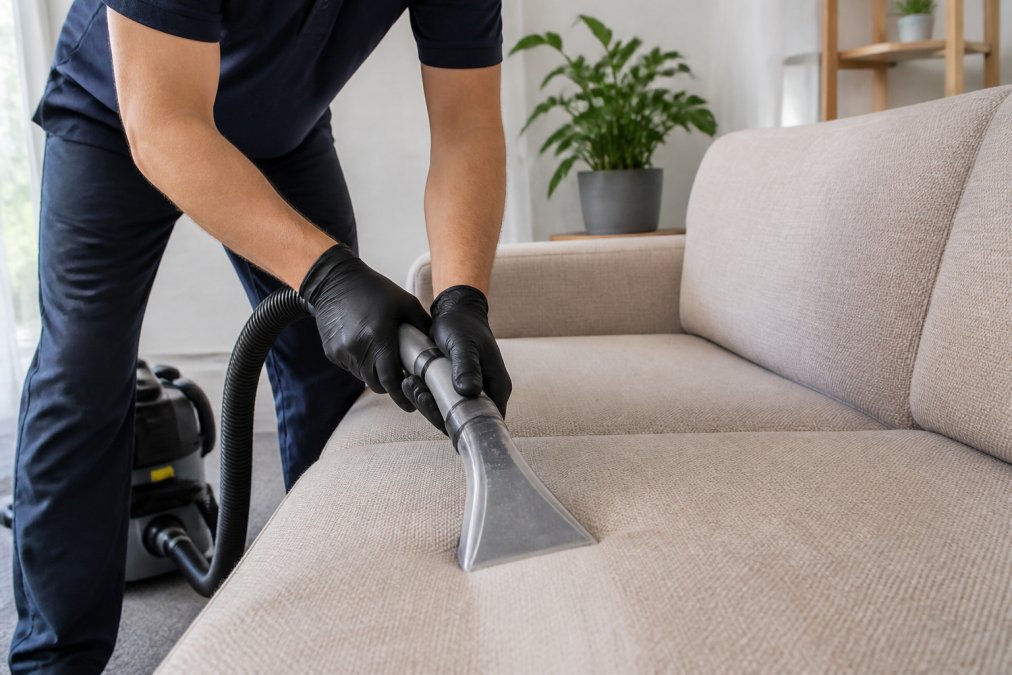
Professional upholstery cleaning for homes is the deep extraction of soil, oils, and biological residue from fabric furniture using equipment household tools cannot match. Your sofa collects what your vacuum leaves behind: skin cells, dust mite waste, pet dander, and fine grit that cuts fabric fibers from the inside. Certified SteemPro has spent over 20 years removing that buildup, improving air quality and furniture lifespan.
Hidden Allergens and Indoor Air Quality
Upholstered furniture acts as a reservoir: every time someone sits down, the fabric releases a cloud of whatever has settled into it.
The Environmental Protection Agency's indoor air quality guidance notes that indoor pollutant levels can run several times higher than outdoor levels, and soft furnishings are a major reason. Dust mites, pet dander, and pollen all bind to fabric fibers. Standard vacuuming pulls surface debris but leaves the deeper layer, where allergen reduction actually happens.
For households with allergies or chemical sensitivities, deep cleaning removes the reservoir, not just visible dirt.
How Often Should You Schedule Upholstery Cleaning?
Most homes need professional upholstery cleaning every 12 to 18 months; households with pets, young children, or respiratory sensitivity should move to every 6 to 12 months.
The honest answer depends on use: a sofa in a busy family room with a shedding dog accumulates soil far faster than a formal living room used twice a month. Upholstery maintenance is a usage calculation, not a calendar item. If cushions look dull, feel tacky, or release dust when you pat them, you are past due.
How Much Does Professional Upholstery Cleaning Cost?
Pricing depends on fabric type, piece count, size, and stain and odor work. Certified SteemPro publishes current rates on its website, so you get an exact figure before anyone arrives.
What Affects the Price of Upholstery Cleaning
Several variables move the number:
- Piece count and size. A single armchair costs far less than a sectional with eight cushions.
- Fabric type. Delicate fabrics such as velvet or jacquard need slower, lower-moisture methods.
- Soil level. Pet accidents, food spills, and years of body oils take longer to break down.
- Odor treatment. Pet urine that has soaked into cushion foam requires sub-surface flushing.
- Add-ons. Fabric protection and upholstery sanitization add cost but extend the interval between cleanings.
Be cautious with any provider quoting a flat per-piece rate sight unseen, fabric type alone can double the labor.
The Professional Upholstery Cleaning Process, Step by Step
A proper job follows a fixed sequence; skipping a step is how furniture gets damaged.
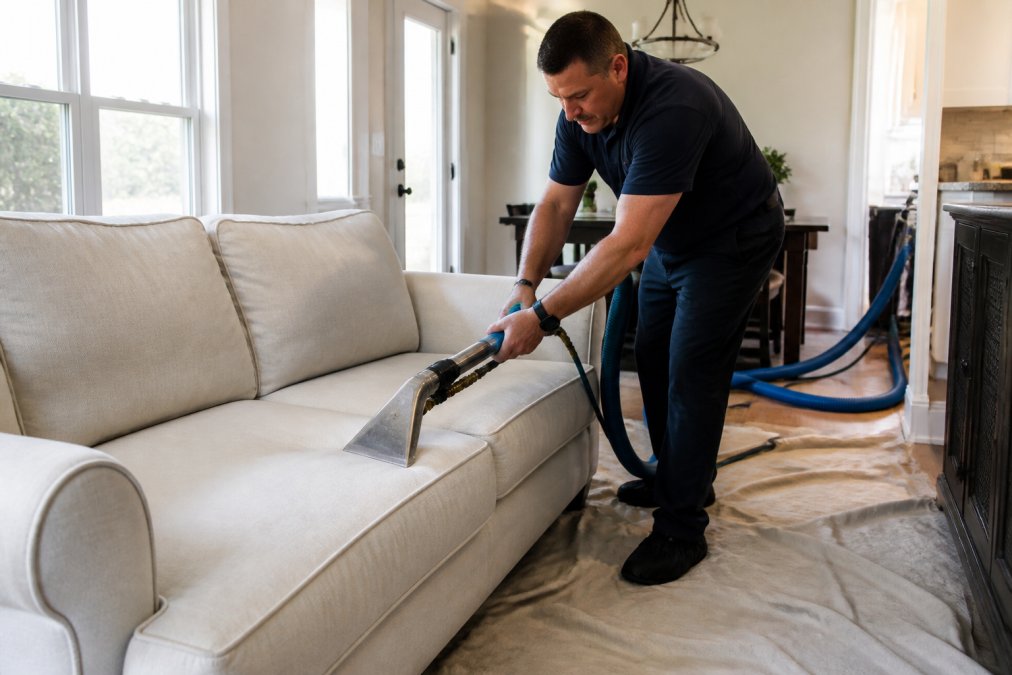
- Inspection. The technician checks seams, cushion construction, and any existing wear.
- Fiber identification. The fabric is tested to confirm what it can tolerate.
- Pre-treatment. Cleaning solutions are applied and left to dwell so soil breaks down.
- Agitation. Brushes or hand tools lift soil from the fiber.
- Extraction. Hot water extraction or a low-moisture method removes the suspended soil.
- Spot treatment. Remaining stains get targeted attention.
- Grooming and drying. Fibers are set, and airflow is directed at the piece.
Fabric Care Codes and Fiber Type Identification
This step prevents expensive mistakes. Furniture makers attach a care code, usually a letter, telling a cleaner what the fabric tolerates.
- W: Water-based cleaning is safe.
- S: Solvent-based dry cleaning only. Water can cause shrinkage or ring marks.
- WS: Either water or solvent is acceptable.
- X: Vacuum only. No liquid of any kind.
The Federal Trade Commission's guidance on care labeling explains how these labels protect consumers. If your sofa carries an S or X code and someone shows up with a standard water-based wand, stop them. Ask how they identified the fiber type before they start.
Common upholstery fabrics behave differently under the same treatment. Microfiber and polyester tolerate moisture well. Cotton can shrink. Velvet and jacquard need low-moisture handling to avoid crushing the pile or distorting the weave.
Hot Water Extraction vs Dry Cleaning Methods
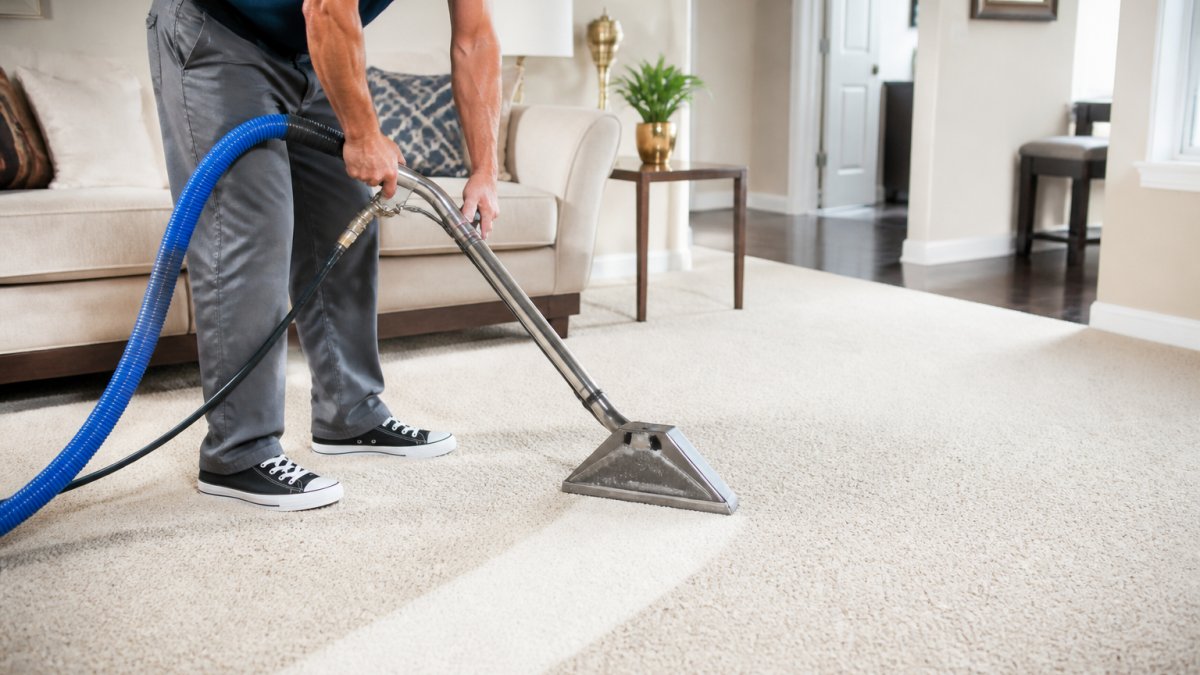
Hot water extraction, often called steam cleaning, injects heated solution into the fabric and immediately vacuums it back out with the suspended soil. It reaches deep into cushion foam, where odor and allergen problems live, making upholstery steam cleaning the stronger option for synthetic fabrics and heavy soil.
Dry cleaning methods use solvent-based solutions and very little moisture, suiting S-coded fabrics and pieces that cannot get wet. The trade-off: less deep soil removal, but far less risk on delicate material.
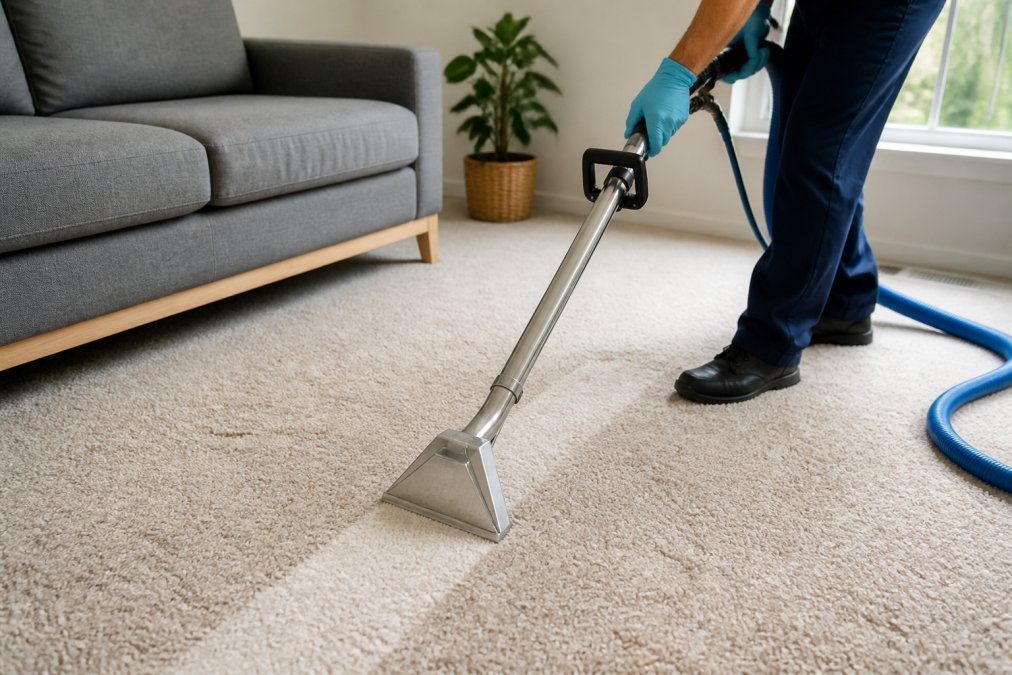
Certified SteemPro uses truck-mounted, oxygen-infused extraction, which combines the depth of hot water extraction with a non-toxic solution.
Upholstery Cleaning Drying Time: What to Expect
Most upholstery dries within 4 to 8 hours when a technician uses proper airflow and does not overwet the fabric. Pieces cleaned with excess water can take a full day or more, and that lingering moisture causes musty odors and mildew.
Three things control upholstery drying time: how much water went in, how much was extracted, and how much air moves across the surface afterward. A truck-mounted system extracts far more water than a portable unit, so the piece is often dry before dinner.
If you are scheduling around a home office or a room you use daily, ask about dry time up front. Certified SteemPro builds fast dry times into its process rather than treating them as a bonus.
DIY vs Professional Upholstery Cleaning: Which Is Right for You?
DIY handles surface maintenance well; professional cleaning handles what DIY cannot reach. Knowing which job you face saves money and ruined furniture.
DIY works for: weekly vacuuming, fresh spills caught immediately, light spot treatment, and rotating cushions to even out wear.
Call a professional for: pet urine soaked into foam, set-in stains older than a few days, whole-piece deep cleaning, odor that returns after a week, and any fabric you cannot confidently identify. Rental machines also leave more moisture behind, raising the risk of mildew in the cushion core.
Upholstery Cleaning Maintenance Tips to Extend Furniture Life
Most upholstery care advice stops at "vacuum regularly", not a schedule you can actually follow. What follows is a cadence you can run on autopilot between professional visits, with the reasoning behind each interval so you can adjust it to your household.
The Between-Visit Maintenance Schedule
Use this as your baseline: shift frequency up with pets, kids, or allergies, and down for a formal room with light use.
Weekly
- Vacuum all seat cushions, back cushions, and the deck under the cushions with a brush attachment
- Vacuum the crevices where crumbs and pet hair collect, using a crevice tool
- Fluff and rotate seat cushions so the front edge does not wear faster than the back
Monthly
- Flip reversible cushions so both faces take equal wear
- Vacuum the frame, skirt, and any exposed upholstery behind and beneath the piece
- Check seams and piping for early separation before it becomes a repair
- Wipe down hard surfaces and armrests where hand oils accumulate
Quarterly
- Rotate the furniture's position in the room if sunlight hits one side more than the other
- Spot-treat any light soil with a fabric-appropriate cleaner (check your care code first)
- Inspect the underside of the piece for pest activity, moisture, or musty odor
- Re-check fabric protection if it was applied at the last professional cleaning
Annually
- Book a professional deep cleaning (see the frequency guidance above)
- Reapply fabric protection after the cleaning
- Review the piece for structural issues, sagging, loose legs, worn springs, that cleaning cannot fix
Why the Cadence Matters More Than the Products
Fabric damage is cumulative, not sudden. The grit vacuuming removes each week is the same grit that, left in place, acts like sandpaper against the fibers every time someone sits down. Skipping two weeks does not show up immediately; skipping two years does, and by then the fiber is worn, not just dirty.
The same logic applies to spills: a fresh spill blots out of the surface, but left overnight it wicks into the cushion core where surface cleaning cannot reach. That is why the schedule front-loads cheap, fast tasks (vacuuming, blotting, rotating) and back-loads expensive ones (professional cleaning, protection reapplication).
The One Task People Skip
Pet accidents do not stay on the surface. Urine wicks into the foam core within minutes, and surface cleaning only masks the odor until humidity pulls it back out. Address them the same day, blot thoroughly, and if the odor returns after a week, the cushion core needs sub-surface flushing, a professional job, not a spray bottle job.
When Maintenance Is Not Enough
If cushions look dull, feel tacky, or release a puff of dust when you pat them, you are past the point where the schedule above will help. The soil has reached the layer your vacuum cannot touch, book the deep cleaning rather than add another weekly task.
Eco-Friendly Upholstery Cleaning and Chemical Transparency
"Eco-friendly" is not a regulated term in the cleaning industry, any provider can print it on a van. What matters is whether the claim is backed by a third-party certification, a disclosed ingredient list, and a safety data sheet you can actually read.
What "Eco-Friendly" Actually Means in This Industry
In practice, the label covers three things:
- Marketing-only claims. No certification, no ingredient disclosure, no documentation. The word appears on the website and nowhere else.
- Self-certified claims. The company defines its own standard and grades itself against it. Better than nothing, but not independently verified.
- Third-party certified products. An outside body reviews the formulation against published health and environmental criteria. This is the tier worth paying for.
The EPA's Safer Choice program is the most recognizable third-party standard for cleaning products in the consumer market. It reviews ingredients against human health and environmental criteria and requires the manufacturer to disclose the full formulation to the reviewer. If a provider claims green certification, ask which certifying body and whether the certification is for the product or just the company's marketing.
Surfactants: The Ingredient That Does the Work
Surfactants are the molecules that lift soil off fabric and hold it in suspension so the extraction wand can pull it away. Every cleaning solution has them; the question is which kind.
- Petroleum-derived surfactants are the traditional workhorses. They clean well but can leave residue that attracts new soil and, in some people, triggers skin or respiratory irritation.
- Plant-derived surfactants (often coconut- or corn-based) perform comparably on upholstery when formulated correctly and biodegrade more readily.
- Oxygen-based boosters break down organic staining and odor without the harsh alkalinity of some traditional builders.
A solution can be plant-derived and still irritating, or petroleum-derived and still safe at the dilution used. That is why certification matters more than the marketing story. Ask what surfactant class the provider uses and whether the finished dilution carries a safety data sheet.
The Three Questions That Cut Through the Label
Ask any provider these before booking:
- What specific products do you use, and are they third-party certified? A named product with a named certification is verifiable. "Our proprietary green solution" is not.
- Can you send the safety data sheet? Every compliant cleaning product has one. A provider who cannot produce it is either not using a compliant product or not tracking what they use.
- What is the residue left in the fabric after drying? This is the question most homeowners never ask and the one that matters most. Residue is what causes the sticky-feeling fabric, the rapid re-soiling, and the irritation some people notice after a standard cleaning.
What to Expect From a Transparent Provider
A provider operating with real chemical transparency will volunteer the product name, certification, and safety documentation before you ask. They will tell you what the fabric will feel like after drying and how long the piece needs to ventilate, and they will tell you when a green product is the wrong choice, for example, on an S-coded fabric that requires solvent-based cleaning, where the "greenest" option may not be correct for the material.
That last point is the honest one: eco-friendly and fabric-appropriate are not always the same answer, and a provider who says otherwise is selling a label rather than a result.
Frequently Asked Questions
How often should you have your upholstery professionally cleaned?
Most homes benefit from professional upholstery cleaning every 12 to 18 months. Households with pets, young children, or allergy sufferers should schedule every 6 to 12 months. High-use pieces like a family room sofa may need attention more often than a guest room chair. Regular cleaning prevents soil from grinding into fibers and keeps fabric protection working longer.
Is professional upholstery cleaning safe for all fabric types?
Trained technicians identify the fiber type and care code before choosing a method. Cotton, polyester, and microfiber generally handle hot water extraction well. Delicate fabrics like velvet, jacquard, or silk may require low-moisture or dry cleaning methods. Always share the furniture's care code and any manufacturer warnings when you book, so the cleaner can match the approach to your upholstery fabric.
How long does it take for professional upholstery cleaning to dry?
With truck-mounted hot water extraction and proper airflow, most upholstery dries in 4 to 6 hours. Humidity, fabric thickness, and ventilation affect drying time. Running ceiling fans, opening windows, or using a dehumidifier can shorten it further. Avoid sitting on damp cushions, and blot any wicking moisture that rises to the surface during the first hour.
Does professional upholstery cleaning remove pet odors and stains?
Yes, when the technician treats the source rather than just the surface. Pet urine soaks into foam and padding, so effective removal involves flushing the affected area with cleaning solutions, extracting the residue, and applying an enzyme or oxygen-based treatment to neutralize odor. Severe or long-standing accidents may need a follow-up visit. Regular spot treatment between professional visits also helps.
Upholstered furniture is one of the largest surfaces in your home and one of the least maintained. Certified SteemPro combines over 20 years of experience with 100% non-toxic, green-certified solutions and truck-mounted, oxygen-infused extraction to deliver deep stain and odor removal with fast dry times. Every job is backed by licensed and insured technicians and a quality guarantee. Get started with Certified SteemPro and give your furniture the deep clean it has been missing.