 ultimate-guide
Eco Friendly Carpet Cleaning for Allergies: 2026 Guide
Table of Contents
- Why Eco Friendly Carpet Cleaning for Allergies Matters
- How to Remove Allergens from Carpet: A Step-by-Step Approach
- How Often to Clean Carpets for Allergies
- Plant-Based Solutions vs. Synthetic Cleaners: What Works
- Professional Carpet Cleaning Service Pricing: What to Expect
- Pet-Specific Allergen Removal and Chemical Sensitivity
- Frequently Asked Questions
Last Updated: September 11, 2026
Why Eco Friendly Carpet Cleaning for Allergies Matters
Eco friendly carpet cleaning for allergies matters because standard cleaning can leave behind the very irritants you are trying to remove. Conventional detergents often contain synthetic fragrances and solvents that linger in the fibers, adding new airborne particles to a room instead of clearing them out.
At Certified SteemPro, we have over 20 years of experience cleaning carpets, and the pattern is consistent: the problem is rarely the carpet itself. It is what the carpet holds.
Common Allergens Hiding in Your Carpet
Carpet fibers act like a deep reservoir for allergens. The most common culprits are dust mites, pet dander, mold spores, and tracked-in pollen. Each one behaves differently, which is why a single pass with a vacuum rarely solves the problem.
Dust mites thrive in warm, humid conditions and burrow into the base of the pile. Pet dander is a protein that clings to fibers and becomes airborne again with normal foot traffic. Mold spores settle where moisture lingers, particularly after a spill that was never fully extracted.
Signs Your Carpet Is Triggering Allergies
The clearest signal is a pattern: symptoms that ease when you leave the room and return when you come back. Morning congestion that clears once you are up and moving is another common indicator, since allergens settle overnight.
Other signs worth noting:
- A musty smell that returns within days of cleaning
- Visible darkening along high-traffic paths
- Symptoms that worsen after vacuuming rather than improve
- Family members or pets who sneeze more in carpeted rooms
If two or more of these apply, the carpet is likely holding more than routine vacuuming can lift.
How to Remove Allergens from Carpet: A Step-by-Step Approach
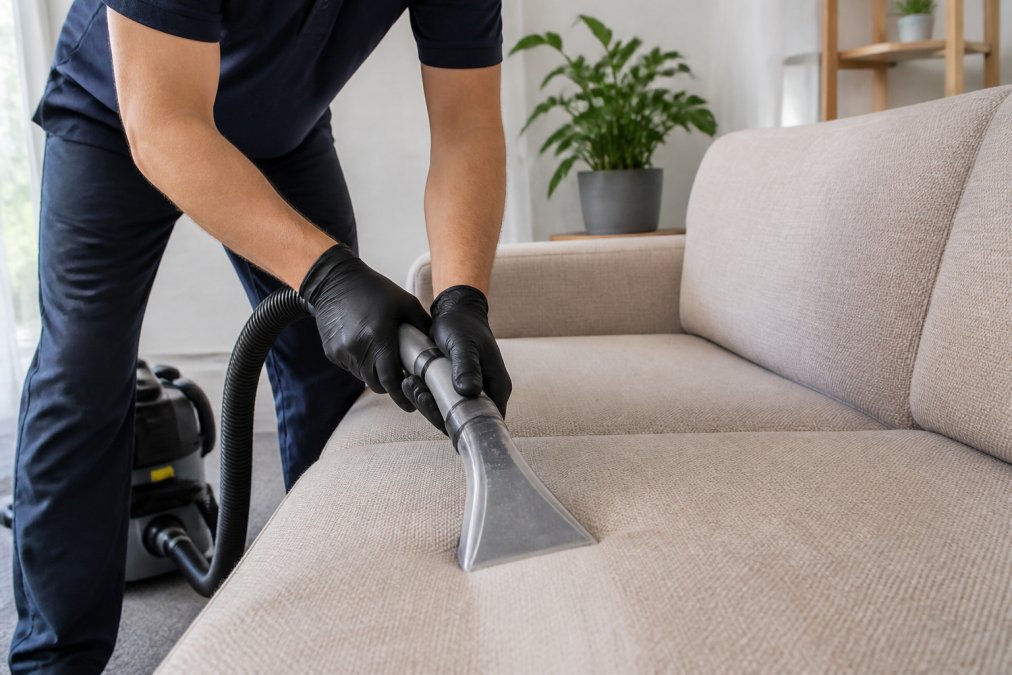
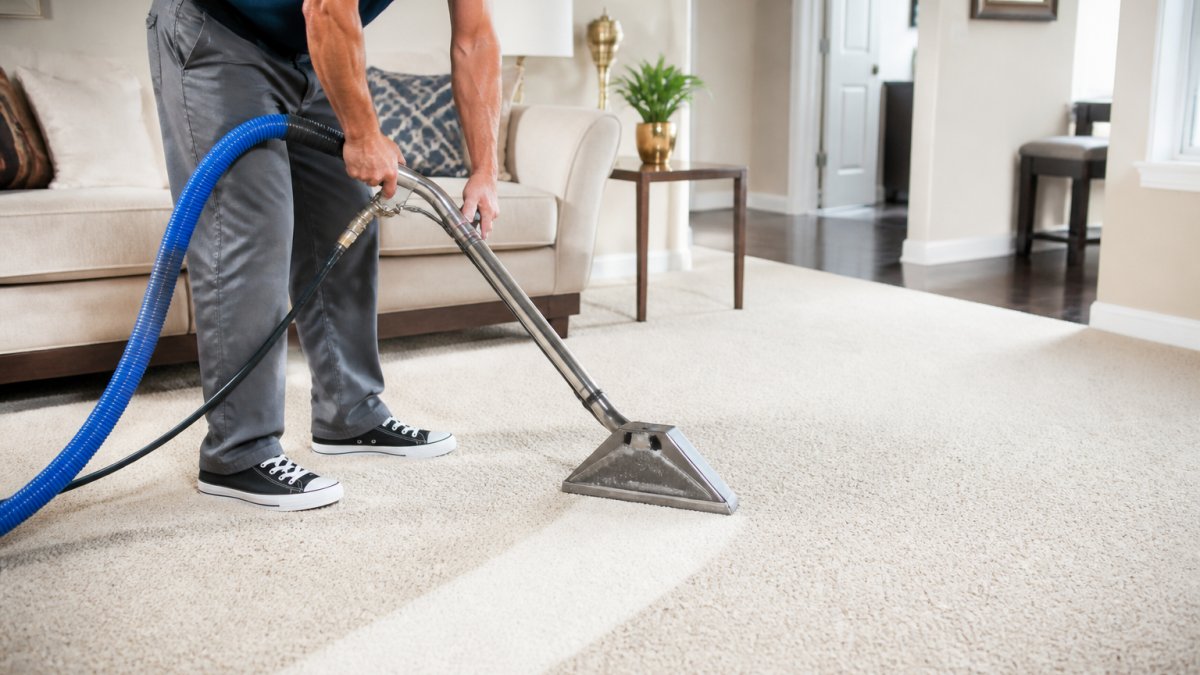
Removing allergens from carpet requires heat, suction, dwell time, and the right solution working together. Hot water extraction, often called steam cleaning, remains the most effective method because it flushes contaminants out of the fiber rather than pushing them deeper. The mechanism matters: heated water dissolves the sticky biofilm that holds dander and dust-mite debris to the pile, and the extraction wand's vacuum lifts the suspended slurry out before it can resettle.
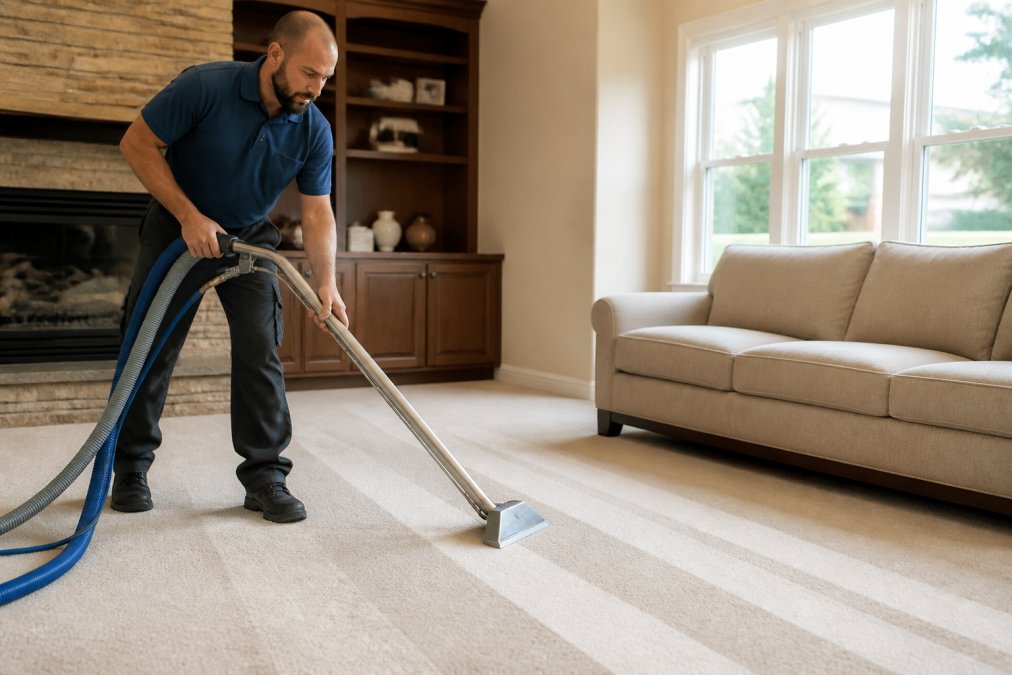
Here is the sequence that works, with the mechanism behind each step:
- Vacuum thoroughly first with a HEPA-filter machine. A HEPA filter captures particles down to 0.3 microns at roughly 99.97% efficiency, which is the size range where cat dander, dust-mite feces, and mold spores travel (the EPA). Without HEPA, a standard vacuum exhausts those particles back into the room and can raise airborne allergen counts for 20 minutes or more after you finish.
- Pre-treat high-traffic and pet areas with an enzyme-based cleaner and let it dwell. Enzymes need contact time, most manufacturers specify 10 to 15 minutes, to break the protein bonds in dander, saliva, and urine. Skipping dwell time is the single most common reason a pet odor returns within a week.
- Apply hot water extraction at the correct temperature for the fiber. Truck-mounted units typically deliver solution in the 190-220°F range at the wand. That heat is what kills dust mites and denatures many allergen proteins. Synthetic pile tolerates the top of that range; wool and other natural fibers generally need lower heat and a pH-balanced solution to avoid felting or browning.
- Use a plant-based, biodegradable, residue-free solution. Residue is the hidden problem. Soap left in the pile acts like a magnet for new dust and dander, so a carpet that looks clean can re-soil faster than before. A properly rinsed, residue-free pass leaves the fiber neutral.
- Dry the carpet in under 6 hours. Fast dry times prevent microbial growth and stop mold spores from taking hold. Air movers and open windows help, but the biggest variable is how much water the machine extracted in the first place, a truck-mounted unit pulls far more moisture than a rental.
- Ventilate and, ideally, measure. Run air movers or open windows to reduce indoor humidity below 50%, the threshold where dust mites and mold stop thriving.
The EPA's indoor air quality guidance makes the point clearly: controlling moisture and reducing allergen reservoirs is central to healthier indoor air. Skipping the drying step undoes much of the benefit.
Measuring Indoor Air Quality Before and After Cleaning
Most guides stop at the carpet. A more useful approach is to measure the air the carpet is feeding. You do not need a lab. Consumer-grade particle counters (often marketed as laser particle counters) report PM2.5 and PM10 in micrograms per cubic meter, and they are sensitive enough to show a real drop after a proper HEPA vacuum and hot water extraction pass.
A simple protocol:
- Take a baseline reading in the carpeted room with the HVAC fan running and doors closed for 30 minutes.
- Note the PM2.5 number, then have the carpet cleaned.
- Wait 24 hours for full dry-down, then repeat the same reading under the same conditions.
A meaningful drop, often in the 30-60% range in pet households, though results vary with carpet age and ventilation, is evidence the cleaning actually removed the reservoir rather than just redistributing it. If the number does not move, the likely culprits are inadequate extraction, a wet pad, or a vacuum without HEPA filtration. This before-and-after framing is the difference between trusting a cleaning and verifying it.
How Often to Clean Carpets for Allergies
Most allergy sufferers should have carpets professionally cleaned every 6 to 12 months. Households with pets, young children, or anyone with asthma triggers should lean toward the 6-month end of that range.
Between professional visits, vacuum two to three times per week with a HEPA-filter machine. If someone in the home has chemical sensitivity, avoid scented vacuum bags and synthetic carpet powders, which add volatile organic compounds (VOCs) to the air.
| Household Situation | Recommended Frequency | Why |
|---|---|---|
| No pets, no allergies | Every 12 months | Routine maintenance |
| Mild seasonal allergies | Every 9-12 months | Pollen and dust control |
| Pets in the home | Every 6 months | Dander and dander protein buildup |
| Asthma or chemical sensitivity | Every 4-6 months | Lowest possible allergen load |
| Recent water damage or spills | Immediately, then recheck | Prevent microbial growth |
That table is a starting point, not a rule. Homes with heavy foot traffic or older carpet usually need the shorter interval.
Plant-Based Solutions vs. Synthetic Cleaners: What Works
Plant-based cleaning solutions work as well as synthetic cleaners for allergen removal, and they leave less behind. The difference is not cleaning power. It is residue and what that residue off-gasses.
Synthetic detergents often rely on sulfates, phosphates, and synthetic fragrances. These can leave a sticky film that actually attracts new dust and dander. For someone with allergies or chemical sensitivity, that film is a fresh irritant sitting in the carpet. The fragrance compounds are the bigger concern: synthetic musks and phthalates used in "fresh scent" carpet products are among the volatile organic compounds (VOCs) that the EPA tracks as indoor air pollutants, and they can persist in the pile for days after the carpet feels dry.
Plant-based and biodegradable formulas break down naturally and rinse out more completely. Look for products that are non-toxic, residue-free, and free of added fragrance. Enzyme-based cleaners are especially effective on pet dander and urine, since enzymes break down the protein that causes both the stain and the smell.
The mechanism is straightforward. A surfactant's job is to lift soil off the fiber and hold it in suspension until the extraction wand pulls it away. Plant-derived surfactants (often from coconut or corn) do that job at a pH that is gentler on wool and stain-resistant treatments. What they generally do not do is leave the optical brighteners and perfume carriers that synthetic formulas use to make a carpet look and smell "just cleaned." That is the trade-off: less sensory payoff, less residue.
What to Look For on a Label
"Green" on a label is not a regulated term. A product can be marketed as natural while still containing synthetic fragrance or harsh solvents. Check the ingredient list, and ask any cleaning provider what they actually use before booking. Useful signals:
- Fragrance-free, not just "unscented", unscented products can contain masking fragrance.
- Biodegradable surfactants listed by name rather than a vague "plant-based blend."
- No optical brighteners, which are a common residue that re-soils quickly.
- pH-neutral or fiber-appropriate pH, especially for wool.
Chemical Sensitivity: A Group Most Guides Ignore
Households dealing with Multiple Chemical Sensitivity (MCS) need more than a "green" label. MCS reactions can be triggered by trace VOCs, fragrance, and even the solvents in some eco-certified products. For these homes, the practical protocol is:
- Request a fragrance-free, dye-free solution in writing before the visit.
- Ask for a rinse-only pass with plain hot water after the cleaning solution is extracted.
- Schedule the cleaning when the sensitive person can be away from the home for several hours, and ventilate aggressively on return.
- Test a small, out-of-the-way area first and wait 24 hours before committing to the full job.
A provider who cannot answer these questions specifically is not set up for sensitive households, regardless of what the marketing says.
Professional Carpet Cleaning Service Pricing: What to Expect
Professional carpet cleaning service pricing depends on square footage, carpet condition, and the method used. Most providers quote per room or per square foot, and pricing rises with pet treatment, heavy soiling, or specialty services like tile and grout.
Because every home is different, the most accurate figure comes from a direct quote. Certified SteemPro provides pricing information on its website so you can see rates before you call.
When comparing quotes, ask three questions:
- Does the price include pre-treatment and deodorizing?
- Is the solution plant-based and residue-free?
- What is the expected dry time?
A lower quote that skips pre-treatment or leaves the carpet wet for a day is not a bargain. It usually means a repeat visit.
Pet-Specific Allergen Removal and Chemical Sensitivity
Pet allergen removal is a different job from general cleaning, and it is where most DIY attempts fail. Pet dander and urine contain proteins that bond to carpet fibers and soak into the pad. Surface cleaning removes the smell for a few days, then it returns as humidity rises.
Effective pet treatment requires an enzyme-based cleaner applied to the source, followed by hot water extraction that reaches the backing. For homes with chemical sensitivity, the same job must be done without synthetic fragrance or harsh solvents, which is why oxygen-infused, green-certified methods are the better fit.
A few practical notes for sensitive households:
- Request fragrance-free solutions before the visit
- Ask about the dry time and ventilation plan
- Choose a provider who is licensed and insured, so you have recourse if something goes wrong
- Test a small area first if a family member has a known reaction
Carpet material matters here too. Wool and natural fibers respond differently from synthetic pile, and a provider who understands fiber restoration will adjust heat and solution strength accordingly rather than using one setting for every home.
Frequently Asked Questions
What is the best way to clean my carpet if I have allergies?
The most effective method is hot water extraction, also called steam cleaning, performed by a professional. This process uses heated water to penetrate carpet fibers, loosening dust mites, pet dander, and mold spores before extracting them with strong suction. For eco friendly carpet cleaning for allergies, choose plant-based, biodegradable solutions paired with HEPA filtration. Vacuuming alone removes surface debris but leaves deeper allergens behind, so professional extraction every few months gives the best results.
Do non-toxic carpet cleaning methods actually remove dust mites and pet dander?
Yes, when the method is right. Hot water extraction physically flushes allergens from carpet fibers regardless of whether the solution is plant-based or synthetic. The key is the combination of heat, agitation, and suction. Eco friendly carpet cleaning for allergies works because it removes the allergens themselves rather than masking them with fragrances. Look for providers using biodegradable, sulfate-free solutions and HEPA-filtered equipment to ensure allergens are captured, not just redistributed into the air.
How often should carpets be cleaned to minimize indoor allergens?
For allergy sufferers, professional deep cleaning frequency depends on individual needs and household situations, often ranging from every 4 to 12 months. Between professional visits, vacuum 2 to 3 times per week with a HEPA-filter vacuum. Regular maintenance keeps allergen levels low and extends the time between deep cleanings. Homes with high humidity or older carpets may need more frequent attention to prevent microbial growth.
What affects professional carpet cleaning service pricing?
Pricing depends on square footage, carpet condition, stain severity, and whether you need additional services like pet odor treatment or upholstery cleaning. Most providers offer free estimates so you know the cost before work begins. Certified SteemPro provides transparent pricing on their website and offers a satisfaction guarantee. Request a quote based on your specific rooms and concerns to get an accurate figure for your home or office.
Allergy season does not have to mean living with a carpet that keeps triggering symptoms. Certified SteemPro brings more than 20 years of experience, 100% non-toxic green-certified solutions, and truck-mounted, oxygen-infused cleaning that restores carpets, upholstery, and tile with fast dry times. If you want a healthier home without the chemical residue, get started with Certified SteemPro and breathe easier in every room.