 ultimate-guide
Cost of Professional Tile Grout Cleaning: 2026 Guide
Table of Contents
- What Affects the Cost of Professional Tile Grout Cleaning
- Grout Sealing Cost: Why It Changes Your Total
- How Long Does Professional Tile Cleaning Take?
- The Best Way to Clean Stained Grout
- Hidden Fees and Common Upcharges to Watch For
- DIY vs. Professional Cleaning: What You Actually Save
- Maintenance Tips to Extend Professional Results
- Frequently Asked Questions
Last Updated: September 21, 2026
What Affects the Cost of Professional Tile Grout Cleaning
The cost of professional tile grout cleaning depends on three things: how much floor you have, what it's made of, and how deep the grime goes. This guide from Certified SteemPro breaks down each variable so you can build a realistic estimate instead of guessing. Most homeowners are surprised to learn that square footage alone tells only part of the story. Layout, tile type, and grout porosity all shift the final number, sometimes by a wide margin. Below, we'll show you exactly which factors matter most and where hidden fees tend to appear.
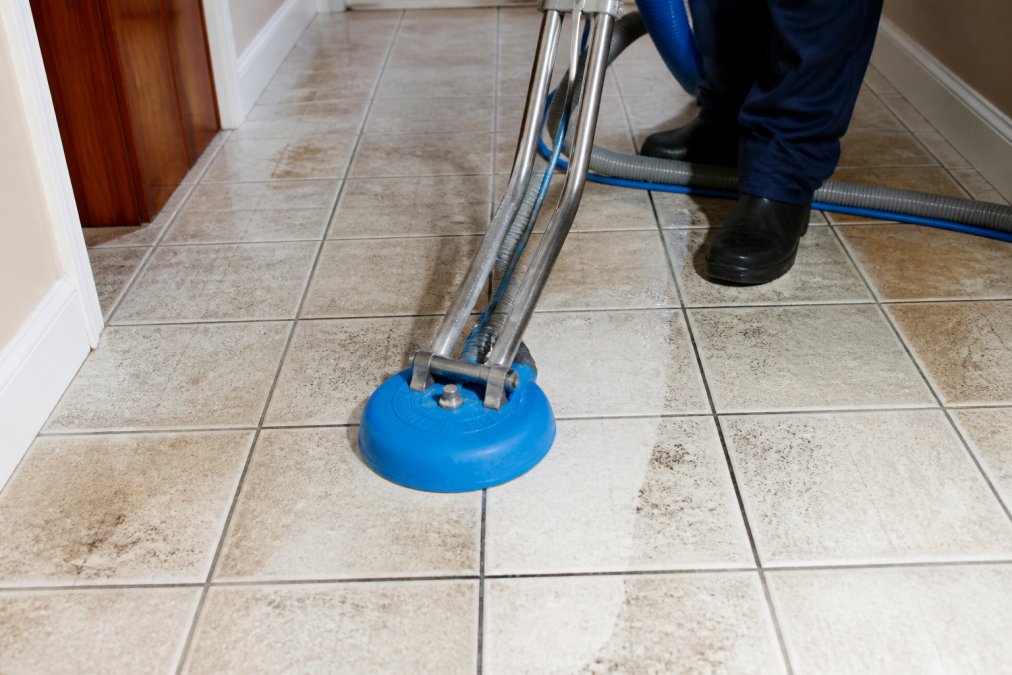
Professional tile grout cleaning is the process of using specialized equipment, hot water extraction, and alkaline cleaners to lift embedded dirt, grease, and biological growth from grout lines without damaging the tile surface. It differs from mopping because it addresses the porous structure of grout rather than just the surface.
Square Footage and Layout
Square footage is the starting point for any cost estimate. Larger floors take longer to clean, require more solution, and consume more labor hours. A wide-open room cleans faster per square foot than a bathroom broken up by fixtures, tight corners, and cabinet toe-kicks.
Layout complexity matters as much as raw size. Rooms with islands, multiple doorways, or heavy furniture that must be moved add time. Many providers set project minimums, so a small powder room may cost proportionally more per square foot than a large open kitchen.
- Open floor plans: fastest to clean, lowest labor per square foot
- Galley kitchens and bathrooms: more edges and grout lines per square foot
- Rooms requiring furniture removal: added time and possible upcharges
Tile Material: Porcelain, Ceramic, and Natural Stone
Tile material changes the cleaning method, and the method changes the price. Porcelain tile is dense and forgiving, so it handles stronger alkaline cleaners and higher-pressure extraction well. Ceramic tile is softer and can chip or craze if too much pressure is applied, so technicians dial back the equipment.
Natural stone is the wild card. Travertine, marble, and slate are porous and acid-sensitive. A cleaner that works on ceramic can etch a marble floor permanently. Stone often needs pH-neutral solutions and a gentler approach, which takes longer.
Grout Sealing Cost: Why It Changes Your Total
Grout sealing cost is usually quoted separately from cleaning, and for good reason. Cleaning removes the dirt; sealing slows how fast it comes back. Sealer application adds labor, curing time, and material cost to the job, but it extends the interval between deep cleans.
Sealing is optional, but skipping it on high-traffic areas usually means you're back to square one within months. Grout is porous by nature. Without a sealer, oils and dyes soak in and become far harder to remove on the next visit.
| Service | What It Does | When It's Worth It |
|---|---|---|
| Cleaning only | Removes dirt, grease, and stains | Light soil, low-traffic rooms |
| Cleaning + sealing | Adds a protective barrier | Kitchens, entryways, pet areas |
| Cleaning + color sealing | Seals and recolors grout | Discolored or mismatched grout |
How Long Does Professional Tile Cleaning Take?
Professional tile cleaning typically takes two to four hours for an average kitchen or bathroom, depending on square footage, soil level, and whether sealing is included. A single small bathroom may finish in about an hour. A large open kitchen with heavy grease buildup and a sealing step can run most of a day.
Drying and curing time matter for scheduling. Cleaning leaves the floor damp but usable fairly quickly with truck-mounted extraction. Sealer needs curing time before the floor returns to normal traffic, so plan around that window.
The Best Way to Clean Stained Grout
The best way to clean stained grout is professional hot water extraction paired with an alkaline cleaner matched to the soil type, followed by sealing to prevent recurrence. This combination reaches the porous structure of grout in a way that scrubbing and store-bought sprays cannot.
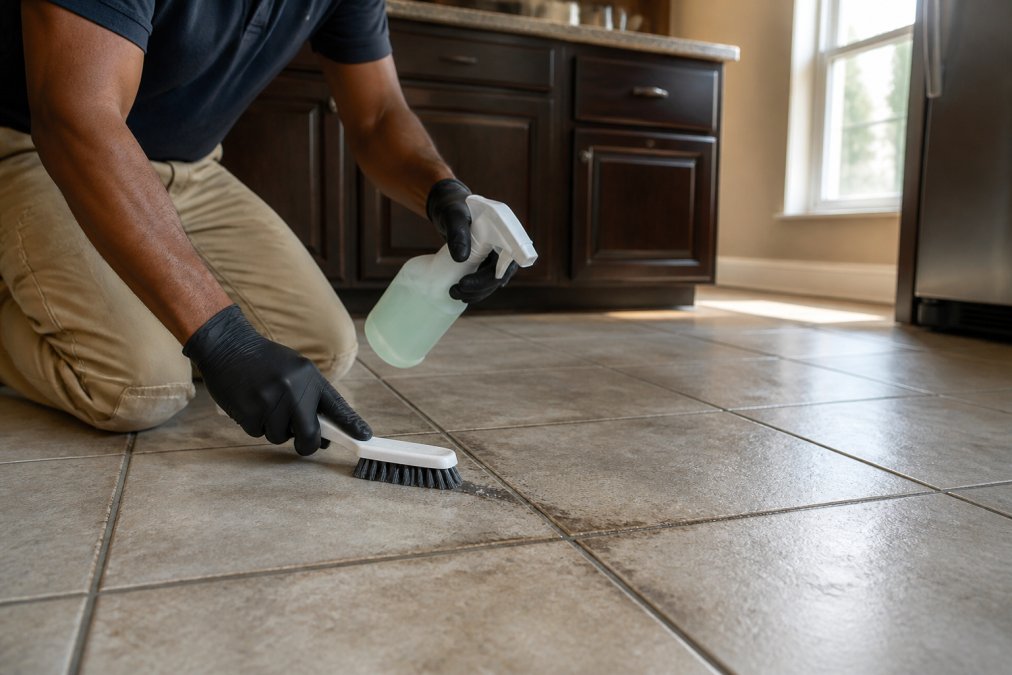
For surface-level soil, a stiff brush and an alkaline cleaner can lift light discoloration. For deep stains, grease, or mold and mildew in grout lines, professional equipment is the difference between clean and truly restored. Steam cleaning and controlled pressure washing break up embedded residue, then extraction pulls it out instead of spreading it around.
What most guides miss is that over-wetting grout can drive moisture deeper and encourage mold. The goal is controlled moisture, not more water.
Hidden Fees and Common Upcharges to Watch For
Hidden fees are where a low quote turns into a bigger invoice. The fix is not to avoid upcharges entirely, many are legitimate, but to understand which ones are standard, which are negotiable, and which signal a provider who lowballed the estimate on purpose.
Standard, disclosed charges. These are normal and should appear on any written estimate:
- Service call or trip charge. A flat fee to send a crew and truck-mounted equipment to your address. Common on small jobs.
- Project minimum. Many providers won't roll a truck for less than a set dollar amount, so a single powder room may be billed at the minimum even if the square footage is tiny.
- Sealer application. Almost always quoted separately from cleaning because it adds labor, material, and a curing window.
- Grout color sealing or re-coloring. A distinct service with its own material cost and skill requirement.
Condition-based upcharges. These depend on what the technician finds on arrival:
- Heavy soil or grease tiers. A floor with years of embedded kitchen grease or pet accidents takes more passes, more chemistry, and more time. Expect a soil-level surcharge above the base rate.
- Mold and mildew remediation in grout lines. Requires stronger treatment and sometimes a second visit.
- Stripping old sealer or wax. If a previous coating has failed or yellowed, it must be removed before new sealer bonds. This is labor-intensive and frequently quoted as an add-on.
- Furniture moving and put-back. Some providers include light moving; most charge for heavy items, appliances, or full room clearing.
Access and logistics charges. These are the ones homeowners most often miss:
- Second story or no elevator. Stairs and equipment hauling add time.
- Tight access or no parking for the truck. If the extraction unit can't get close, hose runs get longer.
- Multiple rooms with separate setups. Each room may carry its own minimum or setup time.
How to protect yourself. Ask for a written, itemized estimate before work begins. Confirm whether the quote is a flat rate or an hourly-plus-materials figure. Ask specifically what would trigger an upcharge and get the threshold in writing. A vague quote usually protects the provider, not you, a transparent one protects both sides.
DIY vs. Professional Cleaning: What You Actually Save
DIY saves money on the invoice but costs time, and results rarely match professional surface restoration. A homeowner with a brush, a bucket, and an alkaline cleaner can improve light discoloration. That approach struggles with deep-set grease, pet accidents, and years of buildup in high-traffic areas.
Professional equipment reaches grout porosity that hand-scrubbing cannot. The trade-off is real, though: DIY is cheaper per attempt, but repeated failed attempts add up. When grout is basically black, DIY often just moves dirt around.
DIY works for maintenance between professional visits. It rarely works as a rescue for years of embedded grime, especially on natural stone or in pet areas.
Maintenance Tips to Extend Professional Results
Preventative maintenance is what keeps a freshly cleaned floor looking clean. The single biggest factor is speed: wipe up spills before they soak into grout. Beyond that, a few habits stretch the time between deep cleans considerably.
- Sweep or vacuum high-traffic areas regularly to remove abrasive grit
- Mop with a pH-appropriate cleaner for your tile type, not harsh acids on stone
- Blot pet accidents immediately and avoid scrubbing them deeper
- Use mats at entryways to cut tracked-in soil
- Re-seal on the schedule your provider recommends, not when grout looks bad again
Floor maintenance between visits is cheaper than paying for restoration twice. Treat the sealer as a wear item and reapply before it fails, not after.
At Certified SteemPro, we've spent over 20 years restoring tile and grout for homes and businesses, using non-toxic, green-certified solutions and truck-mounted, oxygen-infused equipment for deep cleaning with fast dry times. Our licensed and insured team serves residential and commercial clients with a quality guarantee. Get started with Certified SteemPro and see what a properly restored floor looks like.
Frequently Asked Questions
What is the average cost to have tile and grout cleaned?
The cost depends on square footage, tile type, and grout condition. Most providers charge per square foot, with minimum service call fees. For an accurate cost estimate, request a quote based on your specific space. Certified SteemPro offers transparent pricing on their website.
Is professional grout cleaning worth it?
Professional cleaning removes deep-set dirt and discoloration that DIY methods often miss. It restores luster and can extend the life of your flooring. For high-traffic areas or natural stone, professional service is usually worth the investment.
How much does professional grout cleaning cost per square foot?
Pricing varies by region and provider, but most charge a per-square-foot rate. Factors like porosity, grout haze, and sealer application affect the final price. Contact Certified SteemPro for a detailed quote tailored to your tile and grout.
Does professional grout cleaning include sealing?
Sealing is often a separate service. Grout sealing cost adds to the total but protects against future stains. Ask your provider if sealing is included or available as an add-on. Certified SteemPro offers sealing as part of their restoration services.